Saturday, October 8, 2016

and with finality,

As it stands, this blog is sort of a monument to my teenage life, even though it didn't really start when I was still a teenager. When I look back at the posts I wrote I see a good evolution of myself as a writer. Maybe other people read something different - there's obviously a point where there's a slow decline of how passionate you could tell I was writing about videogames and comics.

Not only that, but things happened in my life. Maybe I messed up - it all depends on whether or not you know the truth and what you think of me as a person. It turns out a lot of people aren't necessarily invested in knowing what the truth is, but just need someone to be afraid of.

One of the things I talked about on the blog a lot was the amount of artists involved in pop culture who have little knowledge of things outside of pop culture. To make strong art, you need strong inspirations. As one of my closing statements here - expand the things you're interested in. Your life will be rewarded for it.

##SKELETONPARTY was occasionally a place for some of my darker thoughts and little slices of experimentation with fiction, but primarily it was a place to categorize how I felt about the things I loved. Maybe that doesn't come off so much in an article about what would be the genesis of Devil May Cry. ha ha.

Maybe you'll read more into what I wrote here than I was capable a lot of times of actually putting into my posts. For what people I have that read this thing and think there's useful information here, I'll keep ##SKELETONPARTY open. You can still find it in the dark, even if it doesn't seem like a place that welcomes you.

The real question is going to be what comes after a place like this! There's obviously a lot of history here. Honestly I'm not even friends with the people the originally encouraged me to start a place like this originally anyway, what use do I have for propping up the past and giving my nostalgia a monument?

There comes a time in our lives when meeting new people is what we should be doing. I'm out having new experiences and there will come a time soon that I'll want to write about them.
Wherever I go, I doubt I will update this space to let you know, but that's what makes it fun right?

Strangers you are, you might already be reading me and not knowing it. I hope when you see someone with a skeleton as an avatar, or you stumble on down somewhere dark and lonely, you think of me.

You can be assured that I still feel like writing, but being connected to all of this past lately is doing me absolutely no good. Writers have an interesting relationship to their work that's fundamentally unlike that of other artists because we have to sometimes consciously think of every word that we're putting down.

For those of you terrified at the prospect of someone like me going off and creating a new space or a new identity - you should examine yourself in the mirror. You are afraid of someone you never even bothered to talk to about wanting to go on living and creating.

This is also for you. Whenever you see a skeleton you can be paranoid that it's me. You can never be assured just what kind of person it is that's behind the things you love after all. Maybe you'll be afraid, or maybe you'll let go of that fear. I'll know.

For the rest of you though, my silent audience that seemed to come in short bursts whenever it pleased, I'll be out there.

Thank you and goodnight.


Friday, July 1, 2016

W E L C O M E T O T H E S U R V I V A L H O R R O R

OPINION: Resident Evil is probably better for taking a dive towards being a weird pseudo-action horror game occasionally starring the undead. Also opinion: Barring the REmake, which is probably the only example of a legitimately terrifying game in the series, the best versions of Resident Evil are the ones that aren't really about anything.

There have always been better alternatives to horror than Resident Evil as a series. Capcom probably understands this. The fourth and most famous numbered entry ditched a preoccupation with creating an atmosphere of dread and creepiness with one of tension and exhaust. When a moment of restituted happens in Resident Evil 4, it's generally a much needed break as a lead up to the next set piece and an opportunity for the player to chill out a little.

The best version of Resident Evil 4 is the one with the largest focus on an extra game mode that supplies the player with a character of their choice, a stock of ammunition and increasingly large hordes of cannibal villagers out for blood and sweet chainsaw executions.

Giving the player the opportunity to exist in a perfect vacuum is the best execution of Resident Evil.
After all, none of the character interactions in these games extend beyond the bizarre. Leon (the protagonist) is what Capcom imagines as the perfect American action hero in 4. He is soon supplanted by Chris Redfield, the dough faced and flat nosed special forces commando from the very first game only now grizzled and attempting to smuggle his guns into a foreign country in Resident Evil 5

(picture: caption: the guns are his arms)

Taking all of these aside and putting them in a blender is what gives you the Mercenaries, which had a release on the 3DS as the aptly named Resident Evil: Mercenaries 3D. A game with no cartoonish, hilariously evil pharmaceutical company or sneering British bio-terrorists.
Breaking the game up into these little intoxicatingly feverish set pieces where you're tasked with killing many quickly is basically the absolute crunchy inner core of the third person action game.

At some point last year I bought Resident Evil: Revelations 2 and let it sit in my Steam library while I wasted time on a bunch of puzzle games and visual novels and waifu simulators. Side point: Resident Evil is as much of a waifu simulator as a game like, well, Waifu Bartending.

I've played maybe the first chapter of the game I bought before I got easily sidetracked. There's a mode within the game that offers mission-based levels where you're a bloody steamroller cutting through re-spawning undead abominations until the end goal of the level.

It is Pure Resident Evil, distilled to its finest essences. Dumb, goofy costumes and over-the-top melee animations sandwiched with bizarrely complicated weapon customization and character progression. It is not Survival Horror as two words together. It is neither Survival nor Horror separately.

If traditional horror games are like reaching into a bucket of frothy bile so you can get a key to open the door in a rusty room you've been locked in. Then the purest form of Resident Evil must kicking the bucket across the floor and picking the key up from the ground.

Where I should be overjoyed that the newest entry unveiled at E3 will be returning to its roots, a part of me is sad I wont be solving international biological terror with shotguns and cowboy costumes.

that's the end I guess

Monday, June 20, 2016

ARBITRARY LIST OF COMFORT FOOD

  1. A Nice Steak Purchased At Fry's
  2. Shrugging Off An Existential Crisis In A Way That Doesn't Affect You
  3. Megaman X
  4. Realizing That The People Most Invested In Your Hobby Are Also The Ones Ruining It
  5. SKIN

Sunday, June 19, 2016

positive emo (SMTIV)

the below introduction contains spoilers for SMTIV and references to suicide and depression also I am no longer depressed so I decided to post it incomplete

I've been struggling through depression lately over the last few months more than I usually do, which has been tough. For a life insert: I've been working night-shift for the last year and change, which has contributed a lot to the depression I've been feeling.  You miss out on a lot of things, the sun among them. Even while I'm writing this, the glimpse of the sun I got was while it was disappearing over a mountain.

The denizens of Tokyo in Shin Megami Tensei IV have lives a lot worse than mine could ever possibly be. Not only do they have to constantly be mindful of the fact that a brutal death is waiting around likely every corner (if they don't starve) they've never seen the sun before.

That's not really what drew me to start playing SMTIV though! It was actually complete happenstance that I even ended up here. More real life insert: Usually when I am depressed there is a shortlist of games I play. Almost all of which focus entirely on positive emotions; imagine lots of teenagers with their hands on their hips trying to solve some mystery.

My shortlist is mostly games I have an emotional connection to for one reason or another. I am a sentimental goofball and up until just a few years ago, I didn't have an interest in things that were based out of negative emotions or despair.

Look at it this way: I didn't even really start reading books until after highschool, so imagine the worst motherfucker upset at 'art games' as me from the years of 13-18. Even still after not being that person, I tended to avoid things that weren't, I dunno, build for entirely positive purposes unless I was already happy.

Instead of crawling back to the sunlit vistas and friendship-togetherness of Chrono Cross or Final Fantasy VIII's morality play of learning how to be a better person, I sort of accidentally fell into Shin Megami Tensei IV's fucked up world where every plot development seems to directly deal with fucking up the life of someone else.

One of the first plot twists in SMTIV comes as a revelation to the player about the nature of the world where the game takes place. A character called "The Black Samurai" has been giving people illegal literature that contains references to worlds where people don't live by a strict caste system or have alternative political or religious systems to the ones they live in.

This, in most cases, causes people to either go insane and die, or turn into violent and bloodthirsty demons, in the literal sense of the word.

I didn't even realize I was helping propagate a ruthless caste system until a little while ago, at a little less than halfway through the game. This ruined Tokyo and the world sitting ontop of it is built out of alternatives though, It's not like the game has so far railroaded me into one path over the other.

Every turn in the story brings with it more decisions to be made, and uniquely SMTIV's offerings of moral choices have made me actually stop and put down my 3DS on more than one occasion just to think.

When the decisions are this weighted and larger parts of the narratives and whole characters weigh on your actions and responses, it lends more credence to how oppressive the game feels. Maybe it would be purely enough if like some of the games in the same series that came before it, the game was mainly about how it was constructed around the plot, but SMTIV's whole existence as a game from start to finish is opressive.

 Alternatives that I'm given aren't much better: going a more chaotic path quickly turns you into the kind of person who affects a ruthless, might-makes-right kind of approach to the world. You can become the fascist god-emperor of the post apocalypse world!

The Speed Dating Panel

oh gosh you don't even understand the kind of exhaustion that wracks your body after an event like phoenix comicon. it is the kind of thing where the phrase 'oh gosh' immediately comes to mind because I have been dryly swearing and quipping about every unfortunate interaction (there are many) that happen there for four days that it started bleeding into my regular work life.

heads up: if you're coming from The Website this is where i seem strikingly condescending about the things i like if for the purpose of serving my own cynicism
the con was great - really it was. we had a blast from start to finish. we drank with dudes that ran a hentai website and talked about the shit we've seen in life. i get a sense that the webmaster is a hell of nerd who's simply found a niche that can serve other people well enough to keep him afloat.

i went to a speed dating panel and met a number of great women but unfortunately had to miss the queer /lgtbq speed dating panel afterwards but like
god there's a thing i have to talk about

The Guy who runs the speed dating panel is a massive man with a predictable chinstrap beard whow as dressed as a jedi the entire convention with a requisite plastic lightsaber. at the beginning of the speed dating panel he made a point of saying that for the sake of stirring up the atmosphere and easing some of the shy nerd boys (well, men) into being comfortable his articulate jabs would come only at the expense of the males in the room

and then anytime a woman did anything they were the person being directed at. the reason I'd go back though is because the women were routinely laughing at his jokes, while the men were angrily stewing as he took attention away from them.

he talked about finding love and happiness at a convention - a place where nerds gather and talk and buy and commiserate and drink, as being not just possible but proven. at one point after the conversations were over with our partners, i watched a young dude (probably 18) who i assume has shitty opinions about women in fandom balk and storm out as he found himself not receiving any contact info from any of the 25+ women he spoke to for the entire hour. he exclaimed "i fucking KNEW this would happen" with the shrillness of someone between adolescence and adulthood
while the orchestrator balked with a "yeah yeah, get the fuck out of here."
he stormed out

kicked the door

and all the women laughed

-sk

Tuesday, May 24, 2016

NU-DOOM MURDERHEADS

i really like the way DooM looks when i type it like that, so for the purposes of talking about new id software/zenimax/Bethesda game DooM i am going to type it like that. i feel like DOOM fits the feel of the original two games much more and doom 3 doesn't exist in a modern enough context in terms of relevancy to even be capitalized properly.

the point here: i played the new DooM. i thoroughly enjoyed it! two idiot gamerheads (black hair mand and purple prose man called the game 'playable sugar' and numerous forum goers at select button dot net have claimed pretty much the same (one even got banned for it!)

playable sugar! yes! i have a sweet tooth for this kind of thing. some people have called it Dumb Fun but they are the most wrong out of all of us. they are the kind of people that like Hollywood Horror Movies because regular horror movies gross them out too much/make them uncomfortable.

DooM is the smartest fun. DooM is action shoot game Metal Gear Solid 2. DooM is a game where the plot is nonsense but the story is structured around DooM being a franchise that exists in hearts and minds everywhere.

plainly, DooM is about DOOM. outlining the ways i think this is true will require me to spend even more time with it but i got some ideas

go play it while i think about it

Sunday, May 1, 2016

a new post


Haha whoah it’s been a few months since I updated. Could you guys even remember what all has happened since I was regularly posting lmao here’s a rundown for you if you’ve been living underneath a snorlax (heh, a little referential humor for you.)


·         MGSV released and I played it and spent like a hundred hours dicking around at the start.

·         Hollywood proved it is bad, and then proved it is bad again (link scarjo story here)

·         The latest Tom Clancy game continues a long line of pro-fascist narratives

·         Marvel Rebooted its creative universe

·         So did DC

·         Image released a bunch of comics I was really excited about (like Birthright) that I completely forgot about

·         I started playing one of the best tabletop card games I ever tried, Champions of the Galaxy

·         Street Fighter V was released. Last time I was posting there was not Street Fighter V, and now there is.

·         Hyper Light Drifter finally came out and the OST and basically the whole dang thing is particularly sublime.

actually after that last one (because this could have been a particularly lot of bullet points) the beginning of this year has been kind of amazing for independent games. Superhot and Welcome to the Gungeon and Hyper Light Drifter and Elliots Quest and Galak-Z were all so good and so different from Colorful Indie Platformers that I feel happy heaping praise upon them. True indie games have also been making waves too and the beginning of this year was just kind of super amazing for all of the vidcons that have been coming out lately. And so many comics ughh whoah holy shit it makes me actually want to take part in my hobbies in a meaningful way


for the most part im pretty sure (90%) that most of my readership has bled away from the site so if youre swinging by to read this well BLESS because theres probably going to be a dearth of more content (yeah gotta get that Sweet Content) coming here soon since ive started feeling better about being a person and a writer in general haha ha hAH AH AH ah

ive always wanted to walk the line between whatever/however I think about things and it feeling like im telling you (the Reader) directly about them because I hate writing that comes off as overly formal, but yes I see the point to all this academia and stuff its just Not For My Blog.


play a videogame today friends, ill be back right around the corner eternally behind you in the mirror

Sunday, January 10, 2016

new year

hooray it's 2016
yes i know i missed basically the entire tail end of last year
i was waist deep in journeying and adventuring

our own skeleton friend isn't around to make a post for us this year like he did last year unfortunately, so we'll have to get by on our own. our hearts go out to him.

(that sort of writing can be found here: god bless this mess)

things that happened at the end of 2015

-prospective career changes
-more writing that didn't get published
-getting my life in order
-planning next years events


fin

Tuesday, September 15, 2015

waist deep

hello

i am basically waist deep in MGSV right now and have been busy with things
MGSV is a really good game and at times a really goofy game and not necessarily the kind of high note i was expecting the series to end on
i am expecting Konami to bury it and the fox engine and Kojima to not know what to do for a year or more afterwards, kind of like when Itagaki split from Tecmo

Sunday, July 26, 2015

Gerimi Burleigh of Optichouse Dot Com!

Hey folks! You wouldn't know it unless you were following Infinite Longbox on Tumblr at the time, but I covered Phoenix Comic Con for them this year and you can find my interviews I did for them with some very exciting people over there.

Unfortunately for personal reasons I was no longer able to commit at the website itself, and now I will be posting my last two interviews here on my personal blog as they would be if I had presented them on the website itself, sans reviews of content.

the man himself! 
Now I know most of you wont be familiar with Gerimi Burleigh which is unfortunate but I present this interview as a means to rectify that. He's a brilliant guy who's been working on some awesome independent comics for the last few years now and I really want to share his work and dedication to comics here. It's taken me much to long to get this out here and after deliberating, I've decided to run it here.


SK:Hi I'm Sam Kittreland I am with-

GB: Gerimi Burleigh from Optichouse.com

SK: And what's your most recent title?

GB:Morningstar, it's a western about Lucifer's fall from heaven...as a western!

SK: How did you come up with the idea for Morningstar? Is it something you've been thinking of doing for a long time?

GB: I've been sitting on this idea for probably like fifteen years, maybe even longer then that. I was at San-Diego Comiccon years ago and inbetween going to panels, I was just sitting around doing some sketches in my sketch book. I just drew some cowboys with the shotguns and the trenchcoats and for some reason it occurred to me to put angel wings on them. After I did that, I thought 'there's a story here'. And after that it just took a little while to massage it and build the pieces around it, realizing it was going to be about Lucifer and his fall.


GB: It's an eight issue series, and I have issues one through four published now, and I'm busy writing issue five.

SK: Would you say Morningstar is the longest series you've worked on so far?

GB:Yeah definitely, the other book I published in 2009 was a self contained graphic novel called Eye of the Gods that one is a psychological thriller that was a one-hundred and forty-four page book so it's equivalent to like a four to six issue miniseries. Morningstar is gonna be a little bit longer than that.

SK:After Morningstar, what do you have planned?

GB: Well y'know I have sort of a young adult fantasy story that involves a bunch of teenage girls that are like barbarian princesses. Either that or a vampire gladiator epic I have planned to do.


SK: That sounds really cool. So I noticed last night while I was reading it that Morningstar draws a lot of references to old western movies, so what were some of the artistic influences you had? Did you draw a lot from other comics or cinema?

GB:It was definitely cinema. I can remember as a kid watching a lot of the Sergio Leone Clint Eastwood spaghetti westerns, The Outlaw Josie Wales and obviously The Good, the Bad and the Ugly Even if I necessarily didn't understand what was going on as a little kid-

SK: It left an impact -

GB:Yeah, the imagery of those stories is so powerful. Of these gunfights and lonesome cowboys. They were an equivalent to samurai warriors, except on horses with pistols instead of swords. That mystique of the tone that they carry is what I tried to go for in the comic.

SK: Even artistically going to the whole samurai thing - the cowboy is one of the most famous silhouettes in the world. It's very iconic imagery and i'm surprised I don't see more western comics. Could you see yourself doing another western?

GB: I'm not neccesarily concerned with what genre I work in because I love all genre, I love fantasy and western and horror, when I come up with a story it's more about the journey the characters are going on first. Whatever that emotional arc is I may decide that "oh this is a good horror story or a good western." I can take a different type of story that I was originally planning on doing as horror and shift it into a western. I try to be fluid about it and let the project tell me what genre it wants to fit into.

SK: What was it like growing up in Los Angeles as someone who wanted to do comics, or was it something that came to you later in life?

GB: Well you know it was a really great environment! You have art center out there of course, I didn't go to school there but I have friends who went there, a lot of the animation industry is based there too. In fact in college I was an animation intern at Nickolodeon. It's great to be around people who can show you - it's one thing to go to art school it's another thing to go to work at a job where people are doing creative work professionally. Some of the things you learn in school are theoretical and people do things different just out of the necessity of work - producing creativity on demand, on a schedule is very difficult and very challenging, and to learn a lot from people who do it they show you...not necessarily a shortcut, but ways to do it and be efficient.

SK: Would you ever consider setting a comic book in the area that you grew up in? or something autobiographical about growing up in Los Angeles?

GB:Well I do actually have a book that I plan to do. My fiance works in educational psychology and she does a lot with special needs kids that are emotionally disturbed. I had an idea for a horror story that kind of revolved around emotionally disturbed children, and in that one I realized it was based on stuff I heard from her that in general the kids had to deal with and how the trauma effects the family. When you can add a little bit of supernatural horror to something that is real horror that people have to do in their life, that's really powerful. I realize it made sense since I know the area that we live, why not just base it around our real lives? Why not just inject fiction into an environment that I was familiar with?
Morningstar

SK: What kind of stuff did you grow up reading?

GB: Well I was always a big nerd, I loved Dungeons and Dragons as a kid and I ran tables as a DM. I read a lot of Dragonlance and Forgotten Realms stuff, R.A Salvatore. In terms of comic books I grew up on G.I Joe and X-Men, I was kind of a Marvel Comics kid. I read a lot of indies, I tricked my parents early on as a little kid into getting me a subscription to Heavy Metal Magazine. My local newsstand - they didn't care about selling it to kids, it's just another magazine. I showed it to my parents the first couple of pages that it was a comic magazine that I could be reading. I definitely didn't show them any of the T&A or violence [laughs] I was definitely reading stuff that wasn't age appropriate for me. My taste in art has always been skewed to darker and more mature stuff anyway.

SK: Was it...I kind of want to ask, have you been drawing since you were a little kid? Or did you get exposed to comics first?

GB: Well I was always drawing throughout all of my life. I think the turn of it in comics for me was...I was reading G.I Joe and Transformers because of the cartoons. I had a friend take me to a local comic shop. There was a time where I would miss things and think it was gone forever, and my friend was all "Naw there's this place you can go if you miss something."

SK: [laughs] Yeah, a comic shop.

GB: Yeah, and the thing that really blew the doors off of my mind was that my local shop had raffles every weekend and they would give away some comics, and I got the very first trade of Walt Simonson's Starslammers. That book was as impactful to me as Star-Wars. I had seen it by then, and I know even the Star-Wars comics that like Archie Goodwin wrote and Howard Chaykin drew were very influential, but for me Starslammers felt like it took all of the things in sci-fi and fantasy in cinema and made it that exciting in comics. That's when I became addicted to the medium and wanting to read stuff beyond the cartoons that I knew. That's what led me to wanting to check out superhero stuff and be open to all kinds of genres within comics. It wasn't that long after that I started wanting to draw my own comics.

SK: I've been avoiding asking people while I talk to people I kind of try to avoid asking any of the indie artists which character for Marvel or Dc do you want to work on, I don't really believe that the endgame for the industry should be working on someone else stories...so maybe is there something that during Morningstar has been burning to get out of you?

GB: Well with Morningstar...hm, honestly the first graphic novel I did, Eye of the Gods the reason why I did that was because I didn't feel like my writing chops were up to the challenge of doing Morningstar. Which has seven main characters plus others whereas Eye of the Gods is a little more intimate. Morningstar is kind of the book that I said if I only ever did one comic in my life, Morningstar was that story.  I figured y'know life is short, who knows what's going to happen to you? Once I felt I was ready to tackle it I took it on. That said  everyday I may come up with an idea here and there for a story. Sometimes it's just one line of inspiration, sometimes it's just a paragraph. Sometimes I'll sit there and write a five page document and be like alright I've got it all plotted out. I've got more stories planned for my life than I could ever do before I die, and they're all over in different genres. Fantasy, horror, not so much so many superhero comics. Not because I have a distaste for superhero comics! I grew up reading so many of them and I feel like so much has been said in American comics that I don't know what I could bring to it that's different, so I felt like going and exploring other genre that aren't done as often in superhero comics.

SK: Is there anything you want to say to people that are going to hear about you today? Should people check out Morningstar first or Eye of the Gods?

GB: The main thing I would say is to check out my website, optichouse.com! I have the first whole chapter of Morningstar and the first 30 pages of Eye of the Gods and usually the first 12 pages of each issue. Just check out the website and see if it's a flavor you like.

-sk

Monday, June 15, 2015

the objectively best characters in dragon age: inquisition

Varric Tethras
So in the beginning of Dragon Age: Inquisition after everything has gone right proper fucked, Cassandra and Solas are more concerned with shepherding you around to what needs to be immediately done and Varric is more about making a bunch of jokes about how he's still alive.

In any other fantasy work: I hate this character. In Dragon Age, Varric's voice actor and general panache make him immediately the most likable person you meet. He's also likely the first person to encourage the player to kind of just dick-around for most of the Haven chapter and do whatever.

Maybe his backstory hints at a tragic history or maybe it doesn't. Do you know why I don't care: I didn't play Dragon Age 2 or any of the others so if he has a weak backstory or wasn't The Greatest in another game I can only draw a conclusion from this one. This one: He is a Boss, and has a crossbow named after a lost love and gosh that's just so weepy and poetic and he's a Dwarf writer how could you not like him?
Lady Josephine Montilyet

I don't know what it was about Tali in Erect Masses that made me immediately favor her over every other person besides Garrus in the game, but Lady Josephine Montilyet immediately gave me the exact same feeling as soon as I was introduced to her. 

After a mandatory story sequence where she flusters about her families lack of funds and you can basically respond by hitting on her and she's all like "Inquisitor I don't get what you mean" I realize this Lady is probably flustered by everything in her life but to her the Inquisitor is just another dude and then I knew that it had to be True.

Outside of her Romance options I feel like Lady Josephine is the most sane person in the Inquisition in terms of how to respond poltiically. Ever the diplomat, the options you get if you favor her seem to leave you in much more of a neutral and advantageous political position then I dunno having a spy kill a bunch of dudes

Leliana Fromthefirstgame
Hey: I didn't play Dragon Age 1. So far though I've spent a lot of time in Inquisition wishing that Leliana could be in my party instead of like fuckin' I unno Cassandra or something. Leliana is the Dope Spymaster Lady and even though characters like Varric or Lord Blackwall are implied to be troubled characters, Leliana is the only one that comes across directly from meeting her as being spurned on by something dark and trying to turn it good. 

It is, after all, Leliana in the ruined timeline that isn't above sacrificing anything and everything to restore order to the world and make things right. You don't see that from Solas or even anyone else that you take with you. Also she openly threatens you a bunch of time throughout the game and it's just Great. 


If Dragon Age were a 70's weird fantasy movie, Dorian would be played by John Cleese and he would 100% be the exact same character. Dorian is the perfect character in the game to arrive when he does. Right around the time my Inquisitor started to become a little bit too self-important, the game introduces Dorian who's personality seems to be manifest to drag the wind out of the sails of too high-and-mighty players and also the person you have in your party anytime you want to be Extra Charming Rag Tag Heroes


Monday, April 20, 2015

lonely

  Kitty Horrorshow is the latest in a group of indie developers who's prime focus seems to be crafting exploration based, lonely worlds.
not lonely in the sense of the feeling you get when a long time friend removes you on Facebook over your opinion that their battle for ethics in games journalism is misguided, but lonely like coming to a fairy tale world after the fairy tale has been finished for two centuries.
  These are profoundly places where a society has moved on either of its own volition or because they were forced to. Primarily these spaces tend to act clear cut goals as most videogames do, and ever so often they have no regard for giving the player any method of interacting with the world besides looking at places.
  A description of these spaces might be "Anor Londo sans weight." and maybe that that description implies is that these spaces are any less games than the one where people rave about it's dark imagery when really you're beset by the same glowing eyed skeletons as you are in other games.
  When I started thinking about my own feelings of loneliness in digital spaces and how I'm more likely to play something like Saints Row III than any of these walk around games when I'm craving loneliness it made me consider just what "loneliness" really means to a player.
   Is loneliness being put in a situation without backup? I don't think of the Resident Evil Remake as a super lonely game. Despite the fact that you're in the spencer mansion by yourself, it still falls back on the feelings of peace you get meet another character. It has some of the same action setpieces later in the game that modern titles tend to be so fond of. Sure, the Tyrant is a boss, but he and the arena he's fought in exploding after I shoot them with a rocket launcher kind of muddles the tone the game had been going for up to that point!
   Where do we go to be alone as players then, if not decaying fantasy worlds? If not mildew and mold filled mansions (the mildew and the mold is on gross undead men) Not "as people" as "players" as people who primarily engage with digital spaces by actively playing them. If I want to be alone as a person I can go to my room or I can go out into the woods. I know this is a luxury that isn't afforded to everyone.
   Where do I go to actively be forgotten and ignored? What kind of spaces cultivate loneliness like how Skyrim's developers worked hard on trying to wow the player every ten seconds?
   Are there any? The logical conclusion to this train of thought takes me back to the same place no matter how many times we go through it. We are alone when we're somewhere surrounded by people we don't know. Strangers that invisiblize us either on our own part or a part of the system they belong to.

  Even saying what the acronym MMOG means out loud fills you with a certain kind of promise.
"Massively Multiplayer Online Game." It's multiplayer so we imagine that moment where someone beats us in Mortal Kombat III on the Sega Genesis when we're teenagers on a dusty couch in a basement or that time we got all of our graduating class together for one last round of Halo multiplied by a few thousand. That moment, repeated over and over again, with every player interaction.
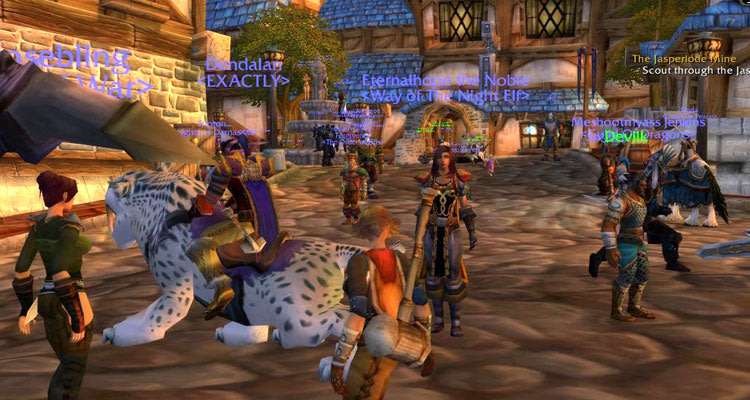
  That's not true! not even close to true, even. If you've never played an MMO it's very easy to become a "fringe" player that only surfaces in raids, or even has their own small little group of friends they play with. Don't group up for that first quest with strangers. Avoid the main landmarks.
  In real life, this would be advice on how to stay on the run from police. In Azeroth or Eorzea or wherever it's an almost unspoken lifestyle that's adopted by many players.
   A peculiar thing: When I first started playing MMO(RPGS) I  remembered the names of almost every player I interacted with. Over time, this feeling of community diminished. Now I don't remember your name even if I beat you in PVP because I don't want to fight you.
  If anything, I go to Eorza trying to fully escape. In an odd turn of phrase I get this feeling when I'm there that I'm not the only one. Especially for people who live in more urban areas than I do who have very few chances of actually getting away from society and the rest of the world - the MMORPG offers a common and easy to find retreat.
Well, I can imagine that for some it certainly beats hiking.

What I've found most funny in my travels through many disparate MMO worlds is that a lot of players that tended to hold to their own also tended to be married. Most of these people were actually women trying to get away from the constant presence of their significant others, but a handful of men I know in real life also were in the same boat.
   It's no coincidence that the married players I've met also had the tendency to, if not being a solo player - belong to groups mostly if not completely comprised of people that were the same gender.
Returning to Eorza now for the hundredth time I am met by a sense of familiarity with a recent update that adds Final Fantasy VII's ever popular Gold Saucer location with an added bonus of including the proceeding titles Triple Triad card game.
   It's funny to me that ontop of all of the mechanics that Final Fantasy XIV features, it takes a pretty rudimentary card game to make me come out of my social shell and actively start seeking and interfacing with other players.
  So far, in a simple forced interaction, the developers of Final Fantasy XIV managed to do the one thing no MMORPG has so far: be around other people


-skeletons


Monday, April 6, 2015

western

Red Dead Redemption was, as critics would call it "great"
My Dad plays videogames. He kind of always has - I remember growing up in a very small town with an old NES my parents bought. When I was old enough to start playing videogames rather then just watching my older brothers play them, they had a habit of standing over my shoulder and regaling me with stories about my mom being a waitress and staying up all night with my dad to play Super Mario Brothers before her first shift.

On the same token, my Dad and I never talked much about how he came to videogames. I always just assumed he kind of had an interest. As much as my Dad was always a cowboy - he'd also always been kind of a nerd. It was through my dad I would discover Conan the Barbarian and the artist Frank Frazetta. It was my Dad's taste in pop culture that first got me interested in things like sword and sorcery and indeed the archetypal western hero than any amount of cajoling to "read this!" or "play this!" that my brothers told me.

It was more about the casual references my Dad might drop. He might draw something and tell me it was inspired by something called Conan or even just say he took inspiration from Frank Frazetta's art. It's sort of what gave met he ability to seek out things on my own apart from what was popular for a little kid - or even just at the time.

I played a lot of videogames as a little kid, which is why I enjoy them now. There's still a small part of me that remembers watching my Dad saddle up and head into the desert on his horse, or how he'd disappear a couple of times a year for a weekend or two and come back covered in dust and dirt and tell my mom stories of his weekend spent on a ranch somewhere with his friends.


Eventually our fascination with videogames caught up with my dad sometime around my older brother somehow managing to con my parents into getting us a Playstation. Even though they were hella poor and maintained that the Sega Genesis was going to be the last console they bought for us.

(about every time one of us got a console for the next decade or so until we could work, my parents constantly maintained it all the way through getting a Wii, which was Very Definitely the last console they bought for anyone but themselves.)

Around this time I remember my older brother and my dad having a conversation about games about cowboys. The game they brainstormed never would come to be but it's still written down in a dusty old notebook in one of my parents closets.

A decade later and we'd see the release of Red Dead Redemption on the Playstation Three.


It's the game that makes me think of my Dad most of all, because it's a sometimes cynical look at the decline of the American Cowboy, when my dad is one of the people I think of when that phrase turns up. He's seen more dusty frontiers than I ever will, and I like to think he spends a lot of time remembering places he's been in life when he rides through a desert plain as John Marsten.

Videogames have a powerful ability to make us remember, not just people but places as well.
With a sad note The American Cowboy is now making the full turn into being just another piece of folklore, but there's still room in Videogames to let us experience that.

Thursday, April 2, 2015

The Hero Returns

Recently (just as of last week) at the behest of a personal friend I've found myself returning to the most recent addition to the Final Fantasy XII series, Lightning Returns.
The trilogy has thus far received incredibly mixed reviews. Outside of some kind of silly "love it or hate it" paradigm all of the Final Fantasy XIII titles are very easy to dislike

I think irrespective of how you feel about the series itself there's little denying that Square Enix has taken a lot of time to experiment with the way these games are designed giving the trilogy project a sword of bizarre personality.

That personality is most distilled into Lightning Returns and the odd off-kilter journey it encompasses.
Really, one thing I keep dwelling on in the setup for the story of this game is that it centers around the return of a heroic character. This is obvious from the title but the story has more to do with characters coming back then just our protagonist, Lightning.

The introduction sequence for Lightning Returns is the standard Square-Enix fare. A voiceover greets and introduces us to the world and its concepts. After a brief moment we are re-introduced to our pink-haired protagonist looking like some sort of Tetsuya-Nomura designed update of Kain Highwind for the ray-bans and smart watch generation.

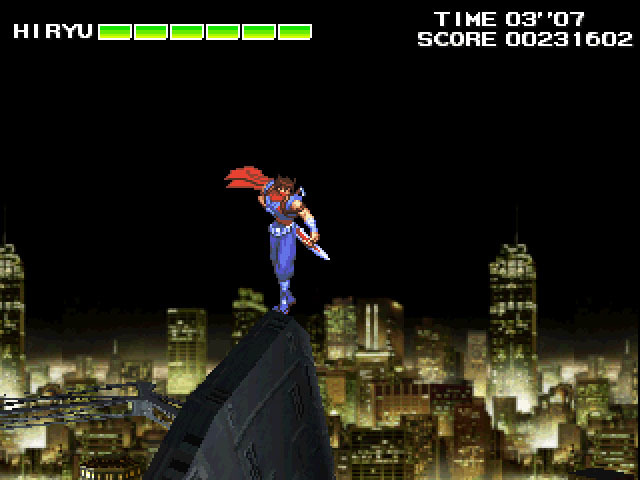
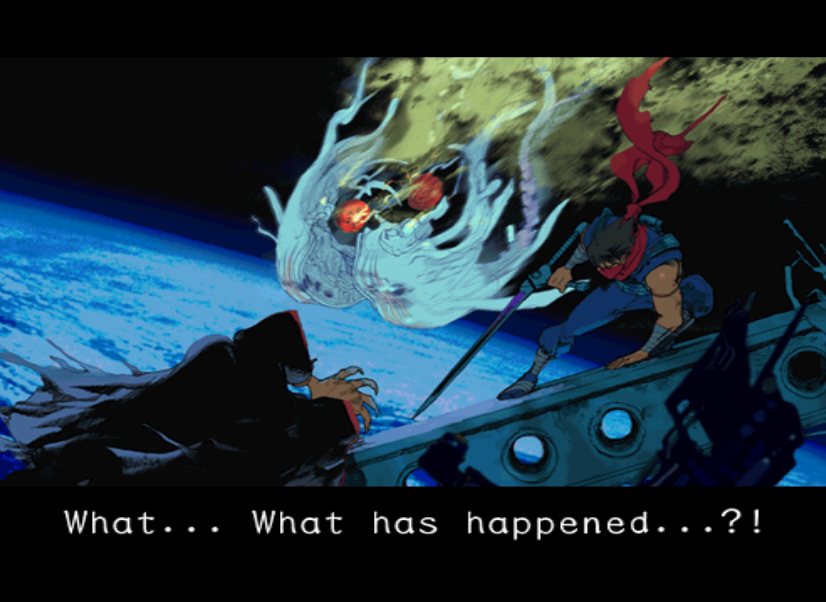
Something that I feel was lacking from the game though can be summed up by the ending portion of another game: specifically by a single screenshot of Strider 2 on the PlayStation.
For lack of being able to source the screenshot of that with the dialogue allow me to provide context. The Strider series barely has any plot at all. The second Strider game structures itself as almost a remake of the original; The levels here all homage the original game like a series of vignettes to make the player feel ostalgic.

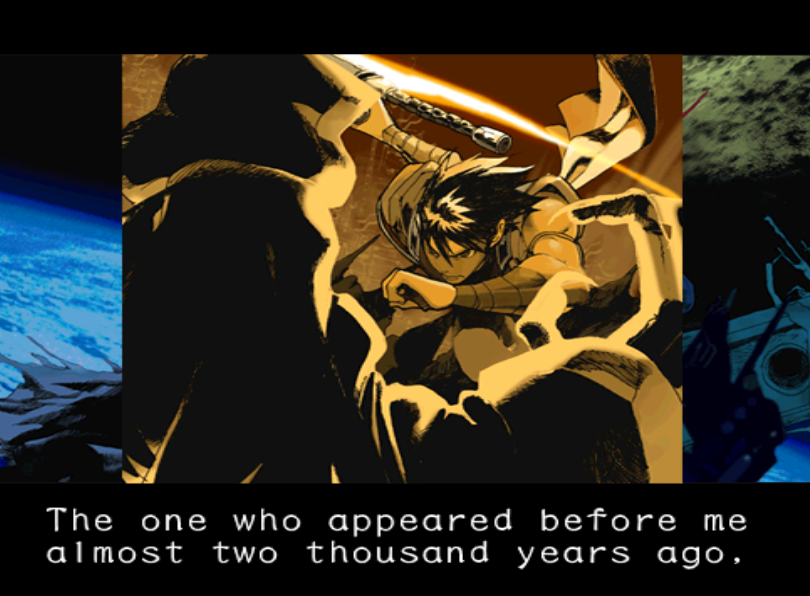
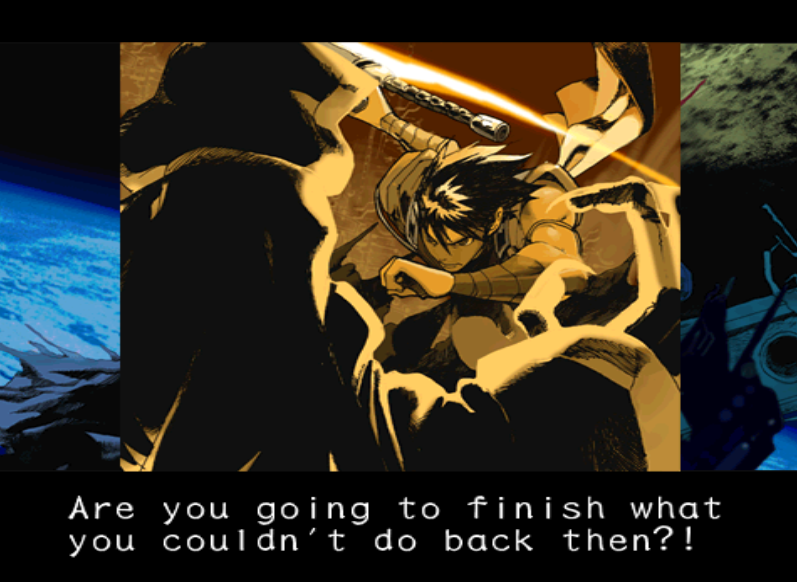
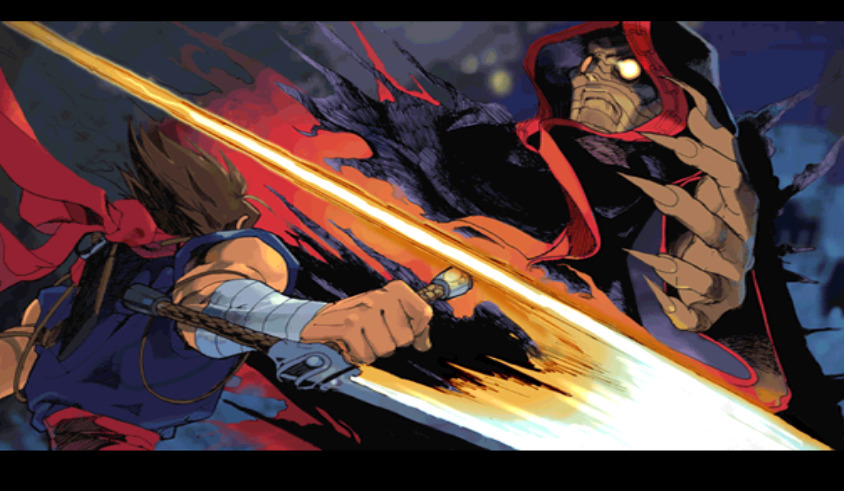
In that screenshot our defiant  hero - because defiant is the best word to use to describe a Ninja who wears a red scarf and a bright blue Gi with a sword that glows in the dark who is fighting a cosmic dictator stares down Grandmaster Meio, videogame final boss.

His sword is cutting him completely apart like he were a giant paper mache sculpture. Meio's only words in response are to ask Hiryu if he is indeed the same Strider from two thousand years ago returned to strike him down. Hiryu's response explains it all.

Strider Hiryu is the real weapon of mass destruction in the game: A weapon brough back from hundreds of years ago with one sole and defined purpose. As a player this action was in contradiction to the personality I projected onto Strider, but suddenly it made the whole game make sense.

In kind, that odd indescribable feeling is the same thing that Lightning Returns. A single moment to give everything context - a sense that a hero has returned even if her purpose remains dubious to those outside of the player and one other character.

Lightning Returns will tell you that its world is projected far into the future of the series. Maybe it's hundreds, maybe it's thousands. Tons of interactions from questlines to casual dialogue dropped by the most robotic of NPC motherfuckers drive it through your head that You Have Been Gone.

But it never feels like it. The only plot threads you follow up on connected to the earlier series have to do with main characters. There is no questline that bounces off of something that happened in earlier games in this odd trilogy.

I enjoy Lightning Returns, but the story doesn't make us feel like we're some mythical figure that has returned. It doesn't feel like we were ever really gone.


Wednesday, February 18, 2015

MIDNIGHT CHANNEL THOUGHTS 2

they say if you watch the tv at a certain time on a blank channel you might see someone you know....
In the game Persona 4 there's a feature called "The Midnight Channel" that the plot of the game focuses on. As is counterpart, Persona 3 focuses mainly on the "Dark Hour" a hidden hour at midnight that serves as a mysterious and ultimately sinister twenty-fifth hour.

Persona 4's plot is openly more sinister for other reasons, though "The Midnight Channel" helps a great deal to lend to the mysterious atmosphere that the story evokes.

I like games that are mysterious because they make me think the most. A shortlist of games that are mysterious that I enjoy the most seem to have a common factor: An element of plot that is seemingly occult in origin that drives the rest of the story. Hotline Miami and the strange phone calls our protagonist receives, The later persona series and an underpinning fascination with mysticism.
The World Ends with You and the bizarre game that the dead are forced to play.

Midnight also happens to be when I've always found I have my best thoughts and the biggest drive to create things. When I was younger I was mostly overjoyed to get my own computer because it meant I'd be able to wake in the night at make things.

This is, surprisingly because of my adult-enforced apathy, an opportunity I kind of left squandered for a long time. So often in adulthood to we kind of lose track of the basic weird mysticism that we sort of unconsciously live our lives by that it can happen for a long time without us even noticing.

I haven't been playing Persona lately so it's kind of weird that I would realize this now. I haven't really even playing very many good videogames or reading that much lately period. I've been playing a lot of Enslaved on the PS3 and thinking about how the game relates to something like Nier, another game focusing on a sort of nameless man guiding someone through a dying world.

That's something I want to touch on later. This post is sort of meant as an outline or a plan of some things I want to do. At the top of that list is still my Devil May Cry features which I have a renewed interest in knowing that DMC: Dumpy Man Comboer is going to be getting a re-release with some added features.

Further down that line is whatever I feel like writing about Enslaved and Nier. I especially want to compare Nier to another title because it's really been written about as its own thing a lot so it'll be kind of handy to get more things drawing comparisons between it and other similar works.

Though it's kind of late for a new resolution its equally important we take some time to set out some goals, even if we're messed up dudes with no skin or organs!

In the coming year the most important thing for SKELETON PARTY is going to be having some more original fiction. There's something very exciting I want to do that's sort of meant exclusively for people who love videogames and the worlds in there.

Anyway, that's all for tonight. Midnight Channel Thoughts 2 might imply a first. Might conjecture a third.

Saturday, February 7, 2015

typical february post

i haven't been reading as many comics lately as I feel like I need to to uphold some sort of Sacred Nerd Duty but okay here goes:

through the holidays I dropped off how much I was reading in general. I didn't really leave myself enough time to keep following Gamergate until recently diving back in because I was too busy kind of avoiding the internet altogether.

Here's What I Read:


The Ruby Throne
Wisely avoiding making any comments about how it existed before fantasy readers were ever concerned with the going-ons surrounding a particular iron throne. 

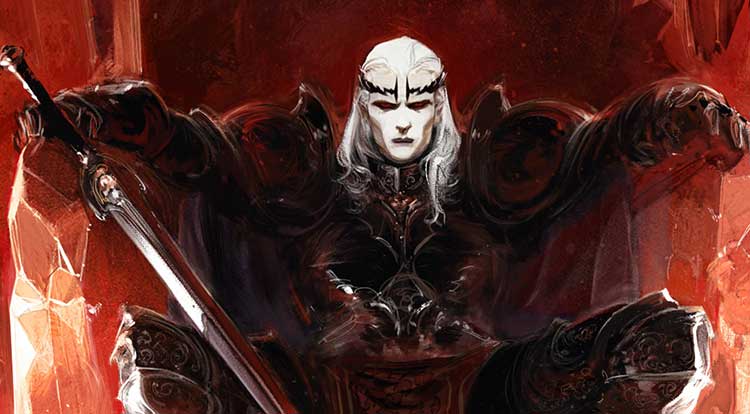
Elric of Melnibone is a holdover from an older era of Fantasy literature before it was mostly a genre that pandered widely to younger readers with occasional trips by much older authors to imbue fantasy worlds with some sense of political intrigue. The Ruby Throne chronicles one of the first (chronological) stories starring the titular Elric of Melnibone, who was doing the whole White Wolf thing years before Geralt of Rivia was ever put under pen.
The thing that other adaptations of Michael Moorcock's albino adventurer have missed is they had a tendency to make the Melniboneans more regal then they were depraved - often missing out on Moorcock's intentions of painting almost all figures of "royal" leadership as out and out sadists.
Brilliantly (and gorgeously) realized here is the Melnibonean empire in all of it's depraved glory. 
This is an adaptation of Elric that I only hope continues to stay this good as future volumes are released.


The Superior Foes of Spider-Man
Hey, remember Gail Simone's Secret Six, the series that was so good it even got picked up again late into the New-5?
The Superior Foes of Spider-Man is a similar pitch, but hinges on the idea that Spider-Man has enough C-list villains to make interesting.
Superior Foes has no real lynchpin character like Secret Six had Bane or Scandal Savage: Ultimately not one character is really likable enough to care about, but Superior Foes covers up how depressing it is by wielding sardonic humor that distracts you from how absolutely awful it would be to try and make ends meet as a supervillain in the Marvel universe. Despite bearing "The Superior" as a tagline it's not actually necessary to read The Superior Spider-Man in order to understand what this book is about. Heck! It's not even necessary to have any exposure to the characters to get this book - the last time I saw the Shocker in anything Spider-Man was still trying to catch him.


Green Arrow: Quiver (#1 - 10) 

RIP Kevin Smith, who couldn't go a single issue of Green Arrow without making a dick joke.
I think his favorite piece of human anatomy (maybe the only one he ever touched) is his own cock because he fills everything he writes with lurid "adult humor" whether or not it's creepy or not for the character in question to be talking in his "signature style"
This series hasn't aged well, but is interesting to look at for how it sets up the series that immediately would follow it. Kevin Smith only really made one solid contribution to Green Arrow canon in this entire run besides the
introduction of a new superheroine, so it's worth checking this out just to see a villain that fans kind of unanimously love.


Rocket Girl 

Rocket Girl is kind of like John Hughes directing a pulp adventure movie as given life by Harold Ramis. In reading about Rocket Girl, other writers have lended to saying the comic is inspired by manga - but this is 80's hollywood genre blending at its finest and it especially shows in the kind of relaxed way the plot developers and the characters interact.
Most of all, Rocket Girl leaves me wanting to see more of what the creators manage to come up with on future projects.


 Hexed

Hexed is one of my comic-store finds where I almost exclusively pick something by how much the cover manages to convey the subject matter and tone on the inside. Hexed reached out immediately with the striking lines of Emma Rios' art on the cover and is exactly the kind of supernatural story I like. Rather then take an old played out page and cast the protagonist as a wry and sarcastic (if tortured) occult detective, Hexed settles us with a selfless protagonist who always seems to be working towards some kind of greater good rather then any long-standing personal obligation or redemption. That's not to say the comic can't do moody or creepy well: It most certainly has that in spades, it's just not always that kind of comic.


SUNDOWNERS

Sundowners has left me still not entirely sure what to think about it. It's got a concept we've seen with superhero books before (the ol' "are they crazy or really superheroes" pitch and takes it a little bit weird by mixing in some occult stylings and H.P Lovecraft influence. What drew me in about Sundowners though was the way the artist works their use of colors and tones to not only set mood - but also remind me of Mike Allred meant that as soon as I flipped through the interior I had to pick it up. Artistic obligations have me still buying this whenever I see it, but I would hold off unless you're the kind of person who likes to read a book here and there just for the way it looks.


 and finally, C.O.W.L.

Being the only series that I researched before going out and deciding to buy, C.O.W.L. still stays among the standouts and is the most memorable thing I got into over the holiday break.
Kyle Higgins has cast a world with superheroes in a believable light by setting it in a world where the way these characters functioned was absolutely necessary to the peace and stability of how this world worked - and then introduces us to the characters and their various desires and failings through a story that is a slow burn in a profoundly interesting way. C.O.W.L. is a superhero book for people that don't usually read them that's peppered with takes on storytelling devices that comic fans have been devouring for years.


Sunday, January 4, 2015

arcade

hello again friends!! this is your pal Nasty here with another tale of delicious deliberation for your eyeballs to engage with

Our Mighty Lord God skittrel was Floored With The Flu during the holiday festivities so he had HIs Own pal come in and write a post for him about a meaningful topic while he was cursed by his garbage, trash body and stuck in bed

arcades sure are cool aint they
just a bunch of real swell guys sitting in a booth hitting buttons with their greasy fingers
unaware about a greater expanse of time slipping past them never to be regained
later growing old and fruitlessly keeping their dying hobby alive to relive their glory days

in any case isn't it heck of weird that somehow in our real cool generation of all these consoles and pc stuff that the arcade hasnt been kept alive even though Great Goons still play fighting games over the world wide web like a bunch of fucked up little children still freaking out over learning how to throw a hadouken

maybe because Arcades carried with them a necessary physicality that is impossible to replicate
the smell of other players necks while you gently nuzzle them during a match of Great Samurai Swords II watching patiently for your chance to drip your hot quarters down the warm inviting slot of the arcade machine and play a round with a real good friend

to a limited extent this is still possible through digital platforms like STEAM but nothing beats the stained carpet and french-fry smell of your local arcade. maybe as a species its because we crave the attention of others and a high score etched forever into the memory banks of an arcade game is in our own heads more permanent then any accomplishment we make together as a species

arcades are impossible to recreate i guess


haha!! see you all in 2016!!

Wednesday, December 31, 2014

last skeleton post for 014

hello!

thank you for sticking with me through the trials and tribulations of this year
if you'll notice my posting and creativity dropped after the start of the year; i didn't mean for anything like this to happen it just sort of did.

as we move forward, one husk of bone to the next we'll be re-evaluating how we produce content aimed at all bone fans and skellymen (and skellywomen) for another year of festivities and pride

Wednesday, December 3, 2014

The image of Dante

There exists very little concept art for Devil May Cry 2. That in of itself is kind of interesting, because it means somewhere on some corporate hard drive is the only record of how the game and the often cited bland-uninspired look it has took shape.

As it presents an interesting conundrum that's worth touching upon albeit briefly. That there's no real "record" of the development of Devil May Cry 2 publicly available tells us we're not yet at a place where videogames are seriously archived in a way that film is. All we really eventually come to care about is the finished product.

So as much as I'd like to break down the art and see what kind of changes took places through development, the art that exists of Devil May Cry 2 is all very closely tied to the finished product and there's very little information on what creatures or characters might have been cut from the game.

There's really no way to follow the game through its development like I've done in the past with Remember Me, or even the first game in this series.
I'll cover and notate how Devil May Cry 2 looks in the actual final review of it, but there's a more important thing that the game plays with I want to talk about: how the player perceives Dante.

The Dante of the first Devil May Cry is this hilarious dude who doesn't take the game seriously or the world he lives in because he doesn't have to. It's not until the end of the game that anything actually challenges him directly. The challenges Dante faces as a character are completely separate from the challenges you face as a player.

This is immediately noticeable if the player picks up that Dante seldom flinches or grunts during combat when attacked. The player is meant to feel like they're sharing some of Dante's power and in exchange a little bit of his devil-may-care attitude.

Who wouldn't want to play a character with so much swagger? We don't get tired of Dante in the first game because we spend little time watching him do anything, and a hell of a lot of time making him do things.

You never get sick of Dante no matter how ridiculous he looks because that swirl of his red trenchcoat when he turns around or the way he raises a single foot off the ground when you use the move Stinger right before sliding across the floor like it's coated in fresh wax and he's wearing socks.

Devil May Cry 2 changes all of this and forces us to re-evaluate how much we like to play as Dante. Sure, the game also introduced concepts like running on walls and more methods of attacking and controlling enemies, but in changing the way not only the character looks but those actions look, it meant Dante was no longer fun to play as.


Dante Sparda post-rock 

I like to use "hollywood" as a good adjective to describe Devil May Cry 2. In many ways, even more then the actual western reboot that the games would later recieve; Devil May Cry 2 seems like the developers trying to force western sensibilities on the game.

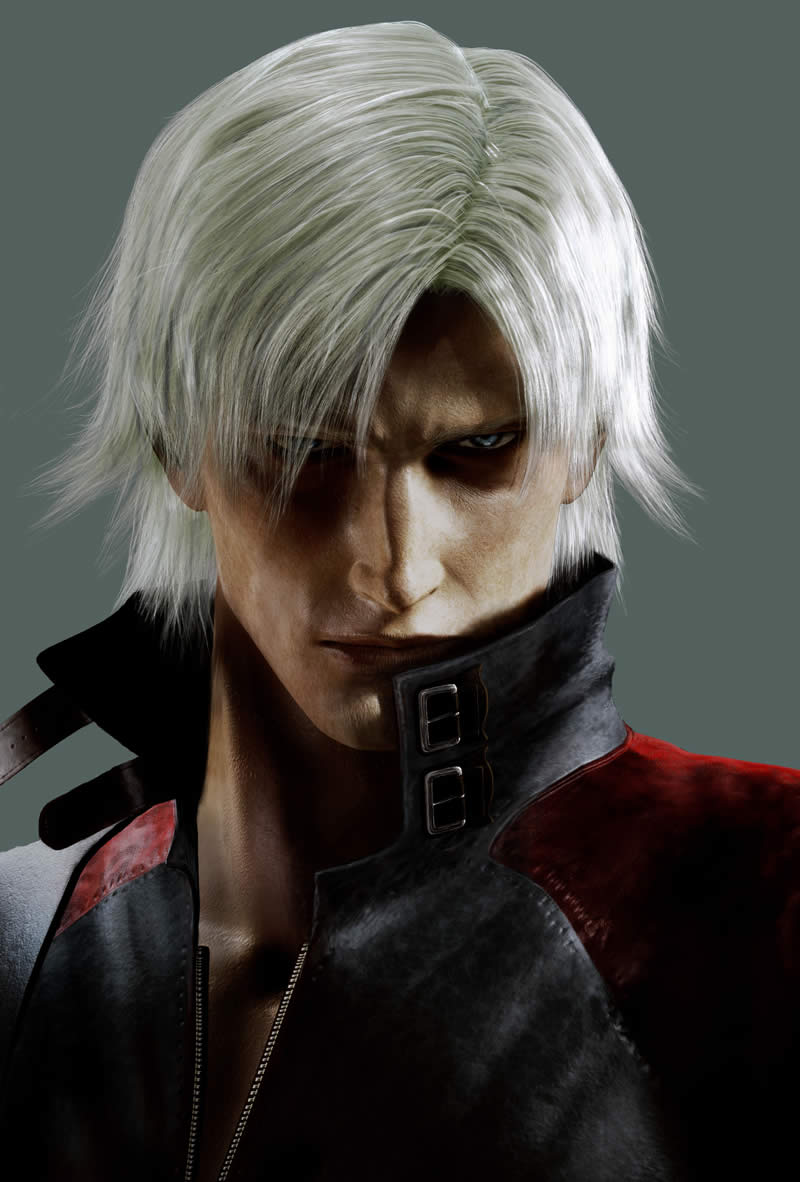
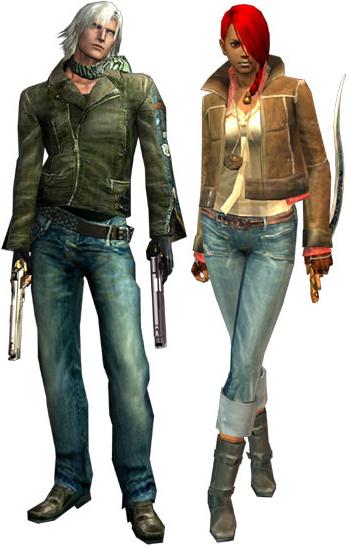
Just examine the way he looks in the above  image compared to say, one of the more recent live action adaptations of Superman. The characters palette has become muted and the red is deep. Where once the function of the costume was much like a superhero utility belt Dante's armor is now much more evident and other parts are stylistically downplayed.

This isn't something that comes down to an outfit looking 'practical' versus 'stylish' but it follows a very similar trend as many modern hollywood superhero movies do.
What are the most essential parts of the design? What is unnecessary juvenile fluff?

Let's note too that compared to the first game, Dante's changes are more in the department of how he's actualized. In the promotional art for Devil May Cry 2 (and more importantly the ingame engine) Dante is rendered as being of a darker persona. He grimaces and covers himself in shadow.

What the game did is balance his colors: his boots are more prominent and his coat is tucked underneath a piece of black bodyarmor. The prominence of his guns and gloves are played up more than his sword.

also, he glowers

Just by looking at Dante and not drawing any conclusions to how he's portrayed in the game, we can tell this is a character that is older and more mature then last time we saw him. Players are meant to immediately know that this is not the same character from the first game - he has been deeply changed by something.

This is where we can bring up some of the first noticeable problems with Devil May Cry 2, not just as a videogame but even presented as a story removed from the context of its mechanics.
Whatever happened between Devil May Cry and Devil May Cry 2 is never shown to the player or mentioned - we have no clue if this is simply how Dante evolved as a character or if something is meant to have changed him.

As a character, it removes a great of the characters journey which should be the core to any part of a story.
Devil May Cry 2 depicts a Dante who is at the end of his rope. But we, as players, never take part in the journey that took him there.

This makes the characterization that we're exposed to through what part of the series existed by this point seem like it was meant for two completely separate characters.
At no point is there a moment meant to unify the two characters in our head! This is a huge problem, because it means we have to reconcile the differences between how he's depicted in our own hands with no help from the storytellers.

Our image of Dante goes from one of a somewhat troubled angst ridden young man used to the world being no match for him and covering his woe with humor to one of a still-troubled older man who has let it all consume him.

But this is only an observation we can make from the way he acts in the second game -
If we were to follow only evidence given us in Devil May Cry 2, all we know about Dante is that he's more serious then the events happening around him and that his father is Sparda.

A common (and true) criticism levied at Devil May Cry 2 was that Dante's new characterization was a poor choice for the game and left it with little to no personality. Dante is made simply too serious for the events of the game - catapulting them above the bizarre tone that the first game used to its advantage into outright silliness.

The 'image' of Dante has much more to do with the way the character is depicted by the story then it does the way he looks. Sans his respective outfit, Dante is still expected to be the same character at his core.
The directors of Devil May Cry 2 made a critical misstep - but would later go on to rectify things with the third game in the series.

Devil May Cry 2 exists mainly as a stop in the road we can examine as a definite concrete way a franchise can mishandle representation of a character without having to use a ridiculous extreme as our example.


Tuesday, November 4, 2014

DEVIL MAY CRY REVIEW

What separated the first Devil May Cry in the terms of storytelling and mechanics apart from every other action game that would use it as inspiration? While it's hard to sum this up in a short sparing of words, I want to do my best to take a second and lay out how I feel about things:

Devil May Cry speaking in just terms of combat and how it relates to the rest of the game is more mechanically sound than a lot of derivatives. Every move that bolsters Dante's arsenal has some practical reason for being there. I could start listing off attacks but I don't want to do that because I feel there's too much ground to cover for it being a backup point in this article.

Those mechanics are then laced up real tight right next to the skin that holds the rest of the game together: Its tone. While it's been accused of having tonal dissonance, I'd like to try and reccuse the game of it in this article. Devil May Cry may not take itself seriously, but it does so intentionally because it wants the player to get involved.

Devil May Cry opens with a now infamous scene of Dante's quiet bar being disturbed by a blonde woman on a motorcycle crashing through the front door and setting it ablaze. Dante reacts nonchalantly, in away that was copied by everyone from Nathan Drake to Sly Cooper by shrugging his shoulders and staying kicked back in his chair.


Dante was responding with a sarcastic nod and reluctant acknowledgement years before a console generation of grizzled men with short brown hair would do the same thing collectively.
People since have criticized Devil May Cry and its introduction scene for being completely ridiculous. As if expecting a game featuring a protagonist who wouldn't be out of place in a highschoolers first attempt at writing a work of fiction was going to be the game that was true art.

Back when Dante did it it was cool and stylish though - that's kind of how the game works.
Everything that happens in Devil May Cry from start to finish is audacious in how extreme it takes a preference of style over substance.

In that audacity everything that happens in the game is completely necessary. Dante becomes a different guy if he acts like the cock of the walk in every cutscene but the player can't juggle an enemy in the air with a pair of handguns or rocket across the floor and impale someone with a sword.

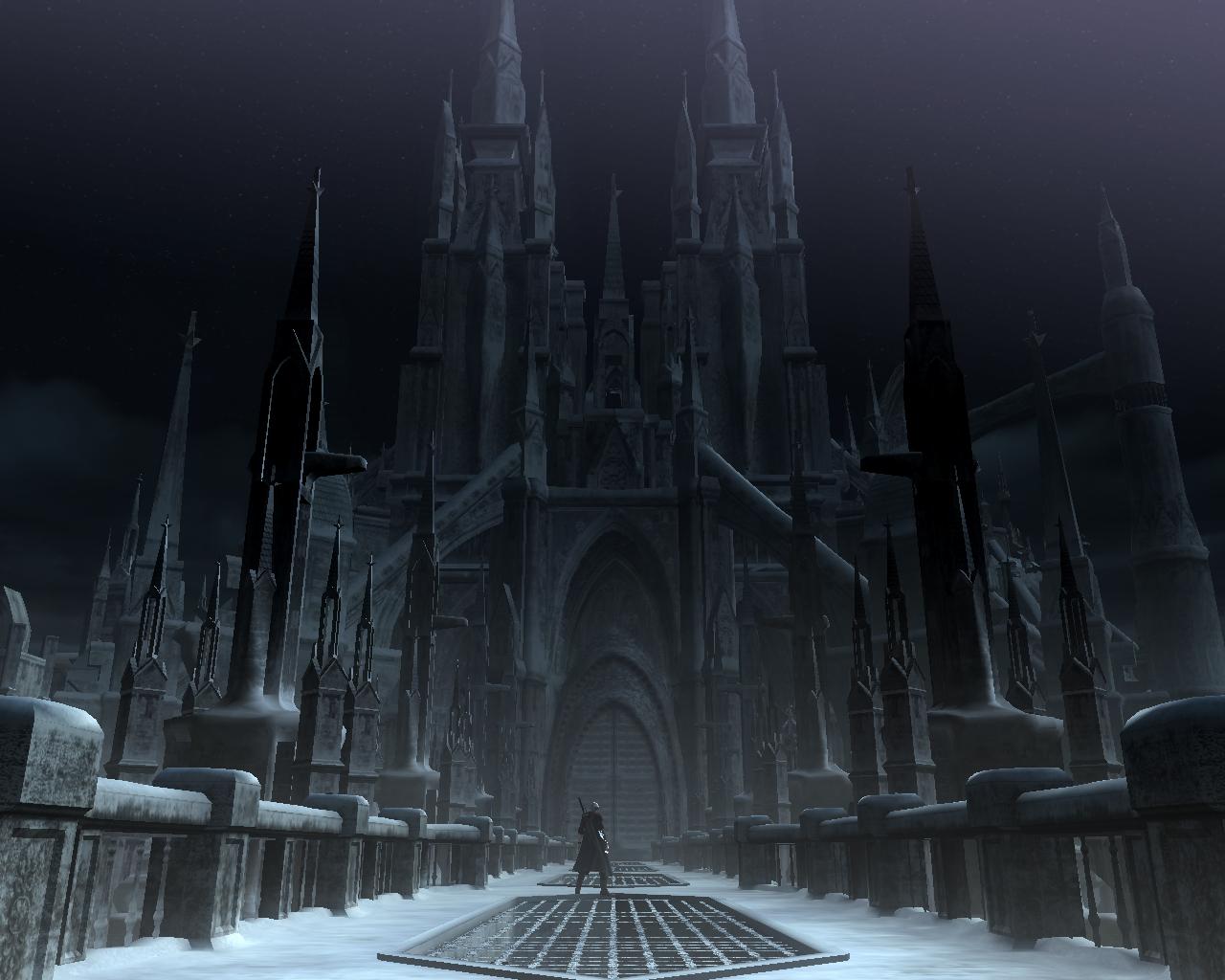
It would be hard to accept Dante could have white hair and not be laughed at if rocketing across the floor of a Gothic cathedral and plunging a six foot blade into the chest of a puppet monster wasn't a core part of the game. Dante's appearance and mannerisms are completely over the top, true. So is the rest of the game and the world that the characters inhabit.

castles would become pretty reoccurring 
So when Devil May Cry opens with one of the silliest and most over the top scenes that might have ever been used to introduce players to a world, it serves to paint a picture of every interaction the player has with the game after that point.

Before I go onto combat and the rest of the game, I want to segue to talk about God of War for a minute. If you're not familiar with God of War, it's David Jaffe's baby that he worked on for years on the Playstation 2.

God of War as a single game or a series whole has been called a lot of things by different publications. A cursory Googles earch for "Epic" and "God of War" in the same sentence returns results that immediately support this.

God of War is a tale of revenge in much the same way that Devil May Cry sets itself up to be. Unlike Devil May Cry though, we're aware of Kratos' intentions from the very first part of the game. God of War sets itself up as a grand tale of revenge. There's no humor to be found and Kratos switches between the only emotions he can grasp (angry and furious) as much as the writers will let him.

God of War wants you to take all of its pumped up machismo absolutely straight faced. Kratos grimaces into the camera and shouts "ARES!" with all of his might before the player even knows why he's supposed to be angry.

The rest of the game is a violent mess where things are gritty and epic for the sake of being gritty and epic. There's never anything to ground Kratos' journey in a way that when it becomes a world-spanning tale of revenge that you notice. Kratos gets skirted from videogame level to vidoegame level and there's no focus on a sense of scale.

Devil May Cry attempts to build up that Dante is on some journey of redemption or retribution for his family and brother that were murdered. The player doesn't know how much of the game is going to be about Dante seeking revenge until almost the end of the game.

The game employs what I want to call a minimal setup. As soon as we know who Dante and Trish are and a moment after we're introduced to Malet island, there's no time wasted before you're thrust into control of Dante.


At it's outset, Dante didn't really control like a lot of other protagonists. He runs at a pace that's not any faster than the characters in a Resident Evil game. He jumps straight up into the air quickly and with a minimal arc that's not really meant for platforming  as it is for combat.

The game introduces the player to its aesthetic before it introduces them to how the player is involved with it. You explore the giant Gothic castle for minutes before you ever have a combat encounter.

If you compared the first game in the series to alter entries it could be seen as being cut from a different cloth. Devil May Cry is a game populated by these moments of quiet between combat where the only company the player gets is the flash of lightning through a window, or a droning organ.

This is, again, contrary to God of War. A game which form start to finish wants to constantly wow the player. Every vista has to be underneath glittering sunlight or pale moonlight, every monster is introduced with a howl and brutal display of violence or aggression.

God of War has none of the moments of quiet that help tie Devil May Cry together. You don't go around expecting a fight in every room even thought you want it that way because of how the game is structured.

Malet Island feels like an actual inhabitable physical space, despite the weird geography. There's never any moment where something is too beautiful or too creepy that you couldn't reasonably picture it. Those quiet moments help drive home the island as a physical space.

There are rooms upon rooms that only exist for Dante to wander through, but are still filled with the kind of details you would expect to find in a space the designers designated as "important"

This design choice is completely deliberate for the particular style that Devil May Cry is going for. Malet Island has to be a seemingly-real place where things have happened before Dante got there. If it were a boringly designed gGothiccastle like in Castlevania: Lament of Innocence then Devil May Cry would have been a joke.

Instead, the player gets to revel in how ridiculous of a concept Devil May Cry is but it always feels like you're laughing *with* the game, as opposed to *at* it. Even when every line Dante says in the game is ridiculous it actually lends a sort of strange credibility to the game.

What's special about Devil May Cry is right there: It clearly knows what it's doing. Really - you can only criticize the game as being 'style over substance' if you've never spent a long period of time picking it apart.

Everything in Devil May Cry is completely deliberate. Hideki Kamiya's other titles actually more or less apply a very similar philosophy from Resident Evil Zero to Okami. 
There's little sense in the original Devil May Cry that anything was included as an afterthought or to satisfy some third party.

A quarter of the way through the game roughly and Dante receives the powerful sword Alastor.
The weapon plays out in one of my personal favorite cutscenes in a videogame, but the weapon itself is notable for satisfying the player in a way they don't expect.

When you first receive Alastor, it doesn't open up combat in any way at first glance. It comes with a second set of combos that all have their own important uses, but it only builds on what's already there rather than add new depth to the combat system is whole.

Alastor of course introduces Devil Trigger, something the player doesn't even know they're going to crave in every installment in this franchise that changes your approach to combat.

the form bears some likeness to its namesake
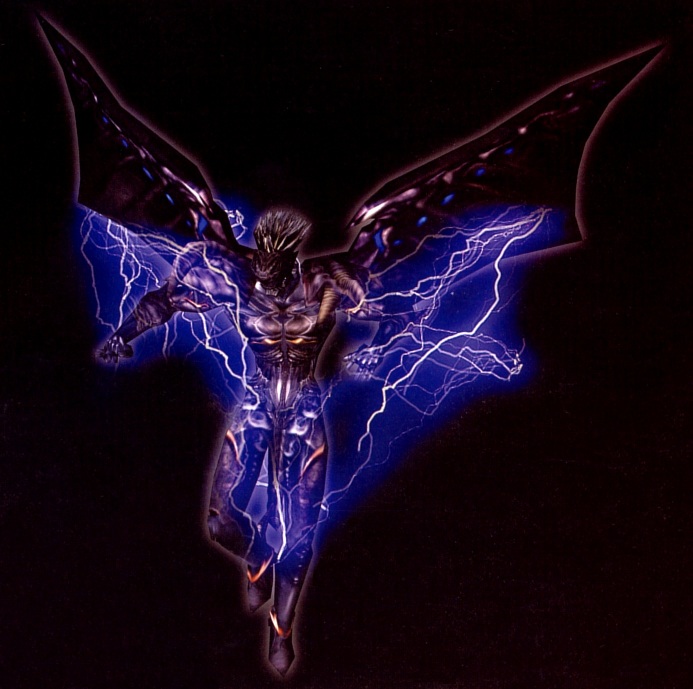
Devil Trigger is a functionality that allows Dante to go all blue and blowing and demonic when his magic meter is full - at the players choice of when and how to use it. Devil Trigger bestows on Dante increased speed, resilience and strength. It has no downsides besides never seeming to stick around long enough, and even refills his HP.

Right around this time, the game is no longer shy about throwing much larger groups of enemies at you. The real meat of Devil May Cry happens right around the time Dante acquires Devil Trigger.

A mob of enemies in Devil May Cry provides a unique challenge. Dante does pretty poorly when he's surrounded by multiple enemies much like our bro Gene in Godhand. So it's up to the player to decide how to break a crowd of tough foes apart on the same hand as judging when to use Devil Trigger.

Popping it too early could leave the player struggling through the hardest part of a difficult encounter or not having it at a critical moment between victory and defeat. Devil Trigger becomes a push that can change the tide of almost any encounter.

Devil Trigger had a lasting influence on the design philosophy of the rest of the series, and each game has taken its own approach to slightly playing with how it functions. Because of the nature of how Dante's inventory is set up in the first game, it means that for most encounters the player is stuck with one Devil Trigger transformation.

While Devil May Cry might have an inventory system that can be seen as aging poorly - it could also be seen as a deliberate choice that uniquely works for the game. I say so because it forces the player to become intimately equipped with the differences of play style between Dante's different weapons.

If it seems like the game wants you to stick with one weapon through an entire situation, that's because it does. It's the focus of how combat works in the original title and I feel that it's unfair to hold it against the game just as it would be unfair to say that Devil May Cry 3's insistence on the player rapidly switching weapons in combat could ever be considered a misstep.

also later in the series he literally fights with buttrock
While you're acquainting yourself with Dante's application of what i'm sure is a long and varied job history of cutting apart Devils, the game switches gears and has you do it to a soundtrack of rock-and-roll guitars with the occasional operatic beat thrown in for good mix.

If it sounds silly, that's because it kind of is. Yet Devil May Cry's soundtrack jumping from mostly atmospheric to hard rock is one of the perfect examples of deliberate design choices that I mention earlier. If the game had made an attempt to have the player fight backed by opera or orchestra the joke would be too on the nose.

Instead, it makes you think you're inhabiting a slice of Dante's world. This is a guy who probably orders pizza every day and can pull off a screaming red trenchcoat with cowboy boots as acceptable wardrobe choices. If Dante had an iPod it would have Opeth and Slayer on it and probably not much else.

It's kind of dumb but the player likes it anyway. Devil May Cry's soundtrack is the vodka added to your soda. Maybe not a good choice you think while it burns your throat but later you're so drunk that anything that comes on the radio starts to sound good.

Other games tend to not deviate from the works that inspire them at all, or wear their inspirations directly on their shoulders. With Devil May Cry it almost seems like Kamiya set up a a work he expected to be copied.

Taken as is, even for all that it has aged, Devil May Cry holds up spectacularly well. It's because of how everything in the game seems like it was meant to be included, from the smallest detail to the largest.

Earlier this month I combed through some of the game's promotional material and concept artwork and it definitely shows that there was a lot the developers either decided was unnecessary completely or just didn't fit the tone of the final product.

While the third game in the series is a great deal prettier and much more refined mechanically, Devil May Cry as it stands originally is a great way to contrast the host of games that pulled from it that other developers would later release.