Thursday, September 25, 2014

Devil May Cry Concept Art

Devil May Cry had a curious journey as it went from a prototype for Resident Evil 4 for what it would eventually would become. Because of the nature of how popular Resident Evil 4 ended up being in the social consciousness, the journey that Devil May Cry made has had less investigation than the many different iterations of Leon's solo outing.

Double unfortunate is that the only concept art of Devil May Cry that really exists on the internet appears to be the handful of pieces available on the HD collect release disk. Most of these for the original title are just promotional renders of Dante and the different enemies in the game.

Let's make some observations based on what I've found available online:


At one point in time it looks like Dante had some sort of supporting cast. Since this picture in particular involves what looks like two police officers/detectives, I think it's actually concept art from when the game was still being pitched as the fourth Resident Evil.

This is a neat tidbit because in the actual series itself, Dante is never around anyone that could be considered a 'normal human' except for a brief bit in the introduction of the fourth game in the series. As the concept would have gone, in the Resident Evil series Tony Redgrave might have represented a fantastical element out of the norm, whereas in Devil May Cry Dante is representative of the closest anchor we have to reality.

Also worth pointing out: Dante's outfit might have been the first thing really established about the character.
A piece of art I haven't been able to find online is a concept artist trying out several different color combinations of Dante's coat before looking like they finally settled on the red outfit.


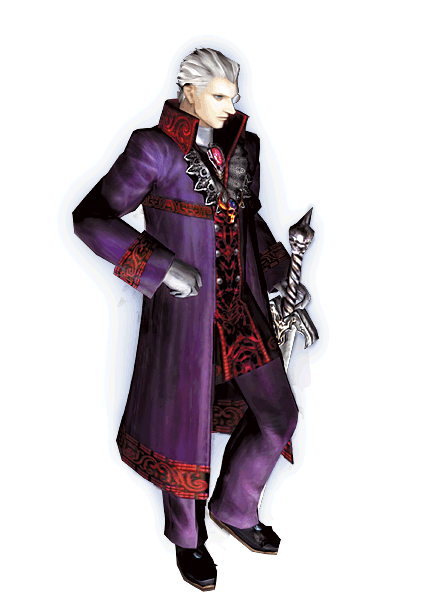
Above and below is more concept art of Dante. I'd like to key into how the character is represented in these pictures as when we might be able to determine if this was "Tony Redgrave" or "Dante" we were looking at. The top most picture is most certainly from the era after Kamiya was given the green light to create a wholly original product. Dante's outfit might be similar to the bottom picture, but is rendered with a more stylish flourish. He looks like a character that wouldn't have been out of place in Vampire Hunter D.


This picture is more hard to say, but judging by how para-military Dante's outfit is I think this is from the "Tony Redgrave" design of the character. Notice that while in an undefined style, certain details are already set in stone: regal detailing on his vest, and a combination of motorcycle and street wear.

Despite Dante's flamboyant attire, this outfit wouldn't seem too out of place among the likes of Oswell Spencer or even Wesker post him seeing The Matrix. Dante's outfit merely stands out more because it is a great deal more complex than the simple button up coat Wesker eventually dons.


Before moving on to area and equipment concept art I've found: This is probably the most interesting piece of art for the original Devil May Cry. Mostly because of the character standing between Dante here, wearing an outfit near what he wears in the final game, and Trish. Was this character a last minute cut? Or simply did Mundus originally appear in the game in a more human form.

Devil May Cry has an incredibly small cast. The top-most picture in this article already details that there was originally more of a supporting cast for Dante when the game was still connected to Resident Evil. Maybe this third figure was a last attempt on delivering on that idea before it was finally abandoned?


In the original concept for Resident Evil 4 that Kamiya worked on, it has been noted that Tony Redgrave was either the son of Wesker, or the son of someone directly related to the Spencer family. Supposedly this is an image of Sparda (judging by the twins in the crib) but here he looks unlike any of the ways he's depicted elsewhere in the series. 

Sparda's role the in the series is an interesting one: His demonic visage frames the opening of the original Devil May Cry and is references throughout the rest of the series. Yet there's never been a true depiction of him in the games outside the above mentioned alternate costume in Devil May Cry 3.


The only possible thing that could shed doubt on that character being Sparda is the existence of artwork of the above man - who bears a striking resemblance to Dante's alternate costume in the third game but is still markedly different. I think there's evidence that more of the series' storyline was already present than we're aware of before the game took on the moniker Devil May Cry and this art points to it. At some point, this became the art that future references to Sparda would be based on. 


Above is concept for an area the player encounters super early in the game, below it is the final product as the area appears in Devil May Cry HD collection. It's immediate that you'll notice the concept art depicts a much gloomier and spookier area. The final area, with the exception of a single boss fight, retains a brightly lit aesthetic for the duration of the game. Also worth pointing out is that in the concept art there's a much more of a bizarre wildlife concept present, whereas all that remains in the final version is the vines below the fountain and a few trees.


This is one of the first areas in the game you'll lay eyes on if you play Devil May Cry. Much like the original Resident Evil has the iconic opening hallway that introduces the player to the mansion this area serves to tell us as much as it can about Devil May Cry and its gothic aesthetic. While there's more color apparent in the conceptual design of this room, the finalized area comes off as pretty close to how it was envisioned.

I especially like how much care was to taken to bring in the spacial arrangement as close as to the concept as possible. The horseback rider dominates most camera angles here, and when it doesn't the camera lingers in tight corridors or on the giant statue of what players will later discover is Mundus towards the climax.


Finallly - an area from the end of the game that borrows elements form many different areas of the game in the final product. Out of frame in the lower screenshot is the fact that the final product keeps the warped, organic pillars that throb like veins. Yet

Unfortunately, even though there's yet more concept art for Devil May Cry none of it really answers the question of how much of the game remains unchanged from its original format. Just looking at some of these area designs there's still some Resident Evil influence. In many ways the castle that Devil May Cry is set in has the sort of bizarre somehow lived-in atmosphere that the Mansion and Police Station in Resident Evil and Resident Evil 2 had.

As the franchise went on it's a feeling that was eventually lessened over time. While there's strange occultism present everywhere in the castle Dante journeys through in Devil May Cry it still feels like a real inhabitable place. This is contrary to the environments in later games of the series that while well designed still feel like wholly digital environments. They become Hell Castle or Ancient Temple.


Saturday, September 20, 2014

DEVIL MAY CRY OCTOBERFEST AT SKELETON PARTY


While it may no longer be fresh in our minds, the original Devil May Cry marked the death knell of the 3D action game as it was. Gone would be the stilted combat systems only added as an afterthought so the player might explore an area in 3D. Instead, it delivered action games to a whole new level of mechanical brilliance and essentially lay the groundwork for the modern action game.

Even games like God Hand came from lessons that team members learned from Devil May Cry and it's approach to making combat a cornerstone of design and not just an afterthought. Some of the only legitimately important titles in the same genre that could be considered cut from the same cloth like Shinobi are only so because they decided to embark in a separate direction entirely.

Devil May Cry was an odd experiment for its time that just happened to crawl kicking and screaming from the womb of creation and grow into a full on franchise. It's a series that's left it's mark with a host of imitators in the realm of videogames as well as dozens of homages and shout-outs in comic books, anime and film.

Appropriate for a game that was so inspired by all of the above that it in turn was able to leave a deep cut in all of the things that inspired it. Devil May Cry wasn't just a breakout hit on the Playstation 2 - it was the result of a creative decision that likely wouldn't fly in a major studio these days.

If you're not familiar, Devil May Cry was a pretty big creative gamble for Capcom. The director, Hideki Kamiya had previous experience but still was given the ultimate go-ahead to create a new title completely separate from one of the studios' most popular franchises instead of trying to tie it in to that pre-existing series.

So goes the back story of Devil May Cry: Around the turn of the new millennium Shinji Mikami tasked Hideki Kamiya with creating a new entry in the Resident Evil series. Kamiya decided to go in a different direction then the survival-horror trappings of previous Resident Evil games, and instead wanted to make a stylish action game.

Eventually the scenario that was planned by Shinji Mikami and Nobooru Sugimura (a scenario planner for Capcom a the time) was deemed to have gone in too different a direction then would be fitting of the Resident Evil moniker, so ties to that series were severed and our hero Tony Redgrave became the eponymous Dante.

Even though Devil May Cry became it's own creature apart from the monster that is the Resident Evil Series, it always had a little familiar glimmer of Resident Evil in its makeup.
Whether it was in the design of the devils bearing the same eyeball-obsessed sinewy look that many Resident Evil monsters would share or the many dark corridors Dante would walk down, Devil May Cry and Resident Evil always had the faintest of connections.

In honor of that, I'll be dedicating the end of September and, more importantly, October to an examination of the Devil May Cry series of videogames (including DmC) in an attempt to not just find out what makes the individual games tick, but more importantly because I'm on the hunt to find out what keeps the series from being true horror and instead be left in the realm of 'spookiness' along with Jack-O-Lantern's and spider-webs.

Of course, my ultimate goal is to do a critique of the newest release/reboot of the series, DmC: Devil May Cry. I feel like the game has been critiqued before, but not in how it relates and draws from previous games in the series in a kind of schizophrenic way. What I mean (if you haven't played DmC) is that the game had an unclear idea of just how much it wanted to draw from previous elements of the series. Anytime it does wholeheartedly, it seems a little bit apologetic in the way it re-hashes elements players were familiar with before.

Before we can make that criticism of DmC seem sound, I'll be covering every other game in the series from what I hope is as close to the ground-up as I can possibly get.


NEXT -> FROM A WORLD OF THE UNDEAD TO A WORLD OF DEVILS: Concept art and it' relation to the final look of Devil May Cry 

Sunday, August 31, 2014

on the previous week or two


A common sentiment read this week: Videogames are at a position that comics were in the 90's. That position is one of pandering. A market unsure of where to expand next, just as well bolstered by marketing to the kinds of people that devour tales of male chauvinism as it is by those of creators who value equality and better representation.

Videogames are such a massive industry now that if not for the massive amounts of money companies make off of things like movies and cartoons, it'd be easy to say that videogames by themselves surpass the size and scope of the comics market. Yet even though massive in size, they have yet to supplant comic books in terms of storytelling and representation.


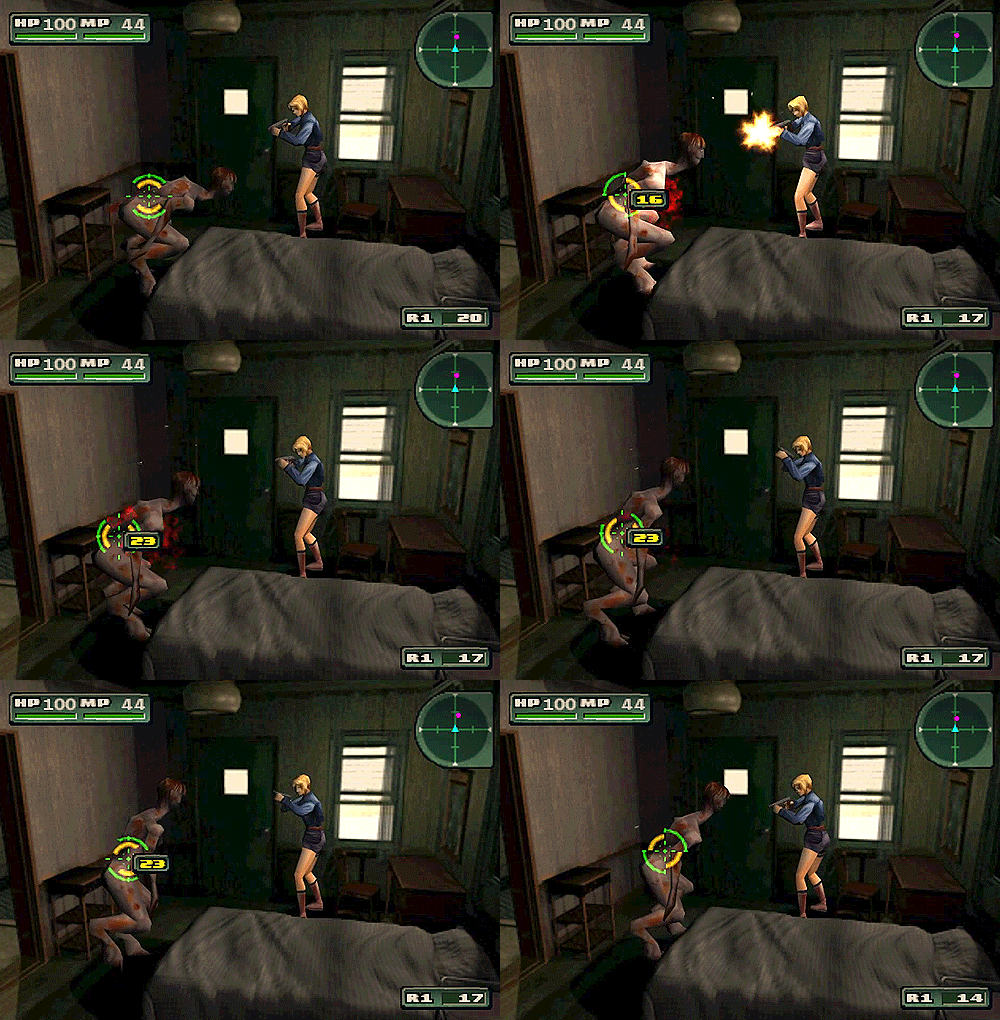
A woman in a videogame (Resident Evil)

Nowdays, comic books attraction to the idea of the male power fantasy has started to become something of a running joke. It's less likely to happen outside of the realm of superhero comics and even there the idea of a story offering better representation of marginalized groups is usually welcomed by the people that actually buy comics (not so much the people that complain about them).

People who buy videogames though couldn't apparently more different. What I mean by 'people who buy videogames' is not the same thing as people who necessarily enjoy them or want the medium to develop or grow at all. I mean a particular set of people that have a stack of posters ripped out of old copies of Electronic Gaming Monthly who, when prompted about what game could offer a truly cinematic experience to rival that of film will tell you God of War.

Not to say that people who read comics are inherently better. For every person that buys a comic like Saga there's probably two or three people who don't see why anyone would want to read anything that doesn't involve a man in a cape. Comics march on without those people though - they are starting to become a minority rapidly losing its voice.

What we're seeing this week with what's been going in the realm of games journalism is like taking a time machine to the end of the era of 90's comics. I don't doubt for a second that when more 'indie' comics started getting higher marks at reviews and more creators concerned about using comics to give more credence to stories that weren't specifically about straight white protagonists showed up that if comic fans in the early 2000's had the benefit of websites like Tumblr and Facebook that we would have seen a reaction that was just as violent from comic fans.

A woman in a videogame (Parasite Eve) 
For the people living under a rock: This week, a particular game developers jilted and emotionally infantile ex-boyfriend posted details of her relationships with other people online for all to see under the cover of "revealing" some "corruption" in games journalism. I wont link the article here because the person doesn't deserve any traffic or notoriety. Instead, we talk about him as if he doesn't exist. In the article itself he stretches the limits of proof only when it's necessary to manipulate the reader into getting on his side. Maybe he'll give up on videogames as a hobby and go to work for a billion dollar game company as a marketer.

I'm not going to call gamers "The gaming public" because they certainly don't represent me even if I used to be someone who would have seemed terrifyingly similar to the lot of them. What they are instead is a group of people who likely feel marginalized by culture at large because they tend to lack any amount of it. In any case, these people quickly stuck to that particular writers claims and were only fueled by the latest Feminist Frequency  video releasing around the same span of time.

The purported scandal along with Sarkeesian's timing was the one-two punch that rustled the jimmies of grognards everywhere. Not only did Sarkeesian's harassers come out full force, but a small community grew around the initial blogger in the claim that somehow game journalism was corrupted or invalidated.

 Ella Guro writes a spectacularly apt take on the whole ordeal as it occurred over the last week and a half or so. That might be a more level headed place to get caught up on the rest of the details of what happened and who exactly was involved.

Violence, particularly the kind of violence people have to constantly be surrounded with if they want to interface with being a part of videogames at all has started to permeate almost every interaction between content creators and their audience.

Abuse seems ingrained in the monster collectively referred to as "gamer culture" as if there were anything we could pin down outside of some vague association with green soda and Call of Duty. Gamer culture, like comic culture, is impossibly large compared to what any of the things it's defined as would have you think.

In a slightly heavy handed and hyperbole filled article, Andrew Todd of Badassdigest pretty accurately surmises that for one reason or the next, abuse is thoroughly ingrained in gamer culture because of how the descriptive "gamer" actually came about.


A woman in a videogame (Dreamfall)
While I want to say it was a long long time ago, it really wasn't more than a few years ago that I was locked into the marketing machine's clutches. I ate it up. I say Andrew Todd's observation that gamers see themselves as the victims is pretty correct because I used to embody that line of thinking.

To put it all on the table as ugly as we possibly can: gamers are the opposite of fucking self aware.
Gamers are, to be blunt, generally miserable people that victimize themselves as outcasts of society because they generally lack any sense of empathy or good graces required to actually take part in it. Gamers favorite characters are fucking Kratos and probably Travis Touchdown. Two characters that are completely morally reprehensible.

For Travis Touchdown though, that's the joke. Hardly anyone who is a fan of No More Heroes is proficient enough in understanding parody or literary devices to even know that the character isn't supposed to be liked for any of the traits he exhibits in the games.

The thing about this, the biggest thing and I can tell it's affecting other people covering the story is that there are just so many victims, so many martyrs now. We're reaching a point where as much as it's nice to consider the idea of "gamer culture" being in it's death throes that we can't even keep track of who to stay mad about anymore.

The conversation about what happened has gone on for little over a week and a half now, with all sorts of people beyond the world of videogames starting to chime in. Yet very few people are bothering to raise concern about what the next step is other than continuing to speak up and hoping these people drown themselves out (when evidence points to reasoning that they never will.)

We talk so much about the symptoms lately that the idea of a cure is never presented other than waiting things out and hoping for the best. As much as it's nice to tell ourselves that these are indeed the death throes of a giant and terrifying beast at the same time it sounds an awful lot like we're still trying to convince ourselves that's the truth.

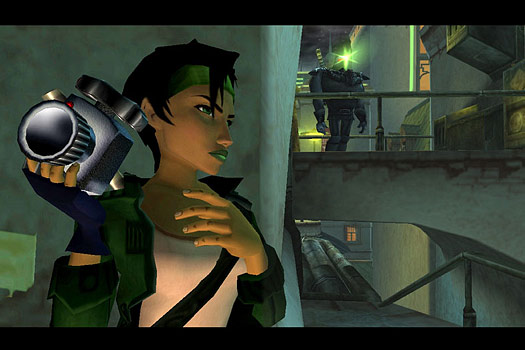
A woman in a videogame (Beyond Good and Evil)
Part of the problem is that any time something like this happens the first part of the dialogue that has to start before any others is convincing people that don't deal with this sort of thing on a daily basis that there's even a problem at all. Even against cries that we're somehow coming for videogames as a medium to uhh make them a better place or something every conversation starts the same way

Over at The New Statesman Ian Steadman gives us a harrowing recap of the many ways so called gamers have tried to discredit Anita Sarkesian and it's much the same as the jilted ex-boyfriend who made a campaign of harassment against a noted game developer. Steadman pretty thoroughly examines the criticism levvied at her and how it's anything but sound - and how referring to straw man arguments as "criticism" undermines any actual criticism that could be levied against the videos (of which I don't think there's much at all)

I don't think the core group of gamers that repeatedly become harassers in the face of having their beliefs challenged are well connected enough or intelligent enough (in a way beyond armchair philosophy) to construct an argument that seems baseless but would have the larger effect of invalidating further works. It's a nasty side-effect of having so many voices cry out together.

A woman in a videogame (Mirror's Edge)

To work towards a solution required better volume control from people capable of doing it. There are a lot of people that could be using their voices to boost the volume of women like Anita's own statements rather than attempting to control the dialogue themselves. Certainly, there are people doing this very thing but it's not enough yet. Telling people that it's not enough is important too, because it makes them keep striving for change.

Finally, at Gamasutra one of my favorite writers, Leigh Alexander, offers her own insight into the situation.
In her article she laments that nobody needs to make games for "gamers" anymore because they're a group that to be blunt, is being erased. Leigh wastes no amount of words saying how much this isn't a problem for videogames but possibly part of the solution.

I've seen a criticism of this specific article that in writing about gamer culture that the article has become a piece that's self evident and is fully apart of gamer culture. This is laughable in a new kind of way. It makes me imagine a horde of grognards chasing a writer down to the chant of "one of us! one of us!' desperate for any lasting amount of validity that the most basic criticism they can leverage at something is it exists in the same space.

As players, it's our space now.


-SKELETONS


Thursday, August 14, 2014

SELLERS REMORSE

"I have too many videogames." In an age of programs like Steam and Origin, I see that phrase parroted around by my friends particularly often (and particularly around summer sale season) these days. A common observation is that Steam as a platform has enabled people to buy more videogames than ever before, and with an easy to use digital-only platform the observation definitely rings true.
Could that be taken as a critique, though? That in changing the way we purchase and in the quantity that we're maybe missing out on part of the experience of owning a title?

People are buying more games now - or maybe more people are buying games. Either one of those is probably an apt take on the matter. My personal stance on it isn't that people are buying more. Rather, I think it'd be fair to say everyone has so many titles in our backlogs because we can no longer get rid of our older titles. There is no "Bargain Bin" that appears when a user has discarded a Steam title because there's no way to discard them.

So I have thirty games I never intend to play again. There's really no 'easy' way I could give those titles to another person that wouldn't result in my entire library being completely invalidated by being banned. Otherwise, I can 'hide' them and they vanish from my Steam library and are relegated to being a cold nagging that tugs at the back of my mind.

confronting your own habits in a videogame - PC/PS3/Xbox360
My guarantee is that if we, as players, had every game we had ever bought on any system we would all have massive and possibly literal libraries of games. With so many different ways of purchasing games online - and lately fewer and fewer ways of getting rid of them outright or simply letting someone else have them has essentially meant there is no "letting go." Did you buy DMC? Too bad, because now that game is going to haunt you into your grave.

Of course consoles still depend on physical media, but that line is getting more blurred with each iterative generation of hardware. Even just little over a year ago there was the possibility that software for the Xbox One would be 'locked in' when it was loaded on the system for the first time, prohibiting people from trading or borrowing games.

 Microsoft fortunately made the wise decision to scrap that feature (I love it when negative components of design are still referred to as features) before release. It was only awhile before that, and hardly a long while to boot, that a digital-only console would have been considered a novelty. Let's not mention the Xperia play here.

Stores still widely featured PC games on shelves (in actual boxes!) and if you had a ton of games on your system it was probably because you went out and bought them. Which was of course accompanied by the sight of a lot more looming towers of jewel cases (if you're a retro collector like me) or the black-box clam shell packages.

Of course it's not like those things went away, but companies have gone a long way to make it even easier to purchase titles digitally. When I first started collecting videogames I made it a point to collect anything "interesting" that either went against established industry norms, or had something to offer besides bland storytelling and flashy instant-reward gameplay. The first victims of my rush to get rid of things were anything that had to deal with God of War, a decision I still don't (and never will) regret. If anything, getting rid of anything remotely associated with that franchise was probably the closest experience I will ever have to a Zen awakening. "Finally, no more bad videogames" I say, my chakra aligning.

Anyway.

One of the first franchises I took an interest in was Legacy of Kain. It's Vampires for Videogames, written through the language of Shakespearean play for an audience that grew up rolling their eyes any time someone mentioned that Anne Rice was like, totally cool.

From a mechanical standpoint, in the entire series, Legacy of Kain always skewed more "interesting" than "good". In an entire series that remains sadly unfinished, there's probably one game that's wholly enjoyable to play from start to finish. Legacy of Kain is however, one of those series' that set out to do something interesting and tells an incredible (and incredibly convoluted) story from beginning to end.

It was for that reason that I set out to collect the entire series, at a time when I enjoyed videogames as a medium but didn't necessarily understand them. My obsession started with Legacy of Kain: Soul Reaver, a depressing and somewhat nihilistic open world action game for the original Playstation.

Soul Reaver was an easy pick because it was in the ballpark of games that have A) never been re-released and are B) still regarded as cheap to acquire. No need to pay hundreds of dollars for a factory sealed copy, when you can find them on eBay for  just a couple of dollars.
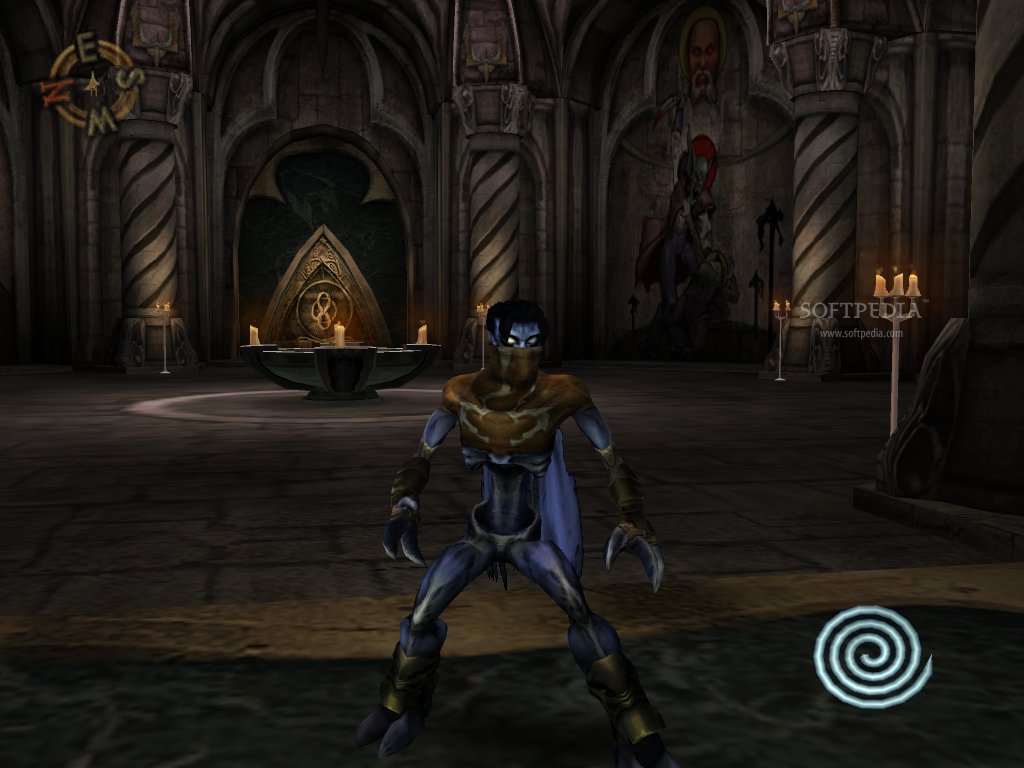
Legacy of Kain: Soul Reaver 2 (PS2)


Eventually I'd acquired almost the entire series, save the original PlayStation title and genesis of the series.
I even made an effort to play the entire series that I owned up until that point.
Now, this isn't meant to be a critical condemnation of the series, but at the time these games were made before 3D action was the norm for titles. With no Devil May Cry to base themselves off of, the series had a relatively simple and frustrating approach to combat, with more focus on exploration and "puzzle solving" (because this was also the days when dragging cubes was a puzzle) with little regard to how the rest of the game worked.

Why I wanted to collect the Legacy of Kain series more than anything, even the writing, was the fact that it was one of the few contemporary series to evolve fully with trends that the rest of the industry worked under. The series progressed from an overhead dungeon crawler at a time when they were vogue to becoming a Devil May Cry style action game.

I was, at the time, misguided. For all of the interesting design choices the series showcased, that inherent 'gameplay' was never the focus the developers intended. It was always about the story they were trying to tell of two characters struggles against causality

Legacy of Kain was always trying to stay relevant at a time when there was generally several gaps in years of production. It had to effectively grow with the changes the industry made to whats popular, but I don't think the core team of developers strong point was ever mechanical refinement.

Maybe in an alternate universe, the creative team hired someone like Shinji Mikami to give directorial input on the franchise. Alas, Legacy of Kain had the misfortunate in being developed in a time when there was seldom cross-polination of Japanese developers in Western studios.

Oh well, I decided it wasn't worth it. Bad investment, why did I buy these games? So even though it took me an incredibly long time to track down Blood Omen 2 in a presentable manner, I traded them out for fuckin' Radiata Stories or some other basic PS2

Why do I beat myself up about Legacy of Kain and its all of the hella weird design choices it exhibited over the years?
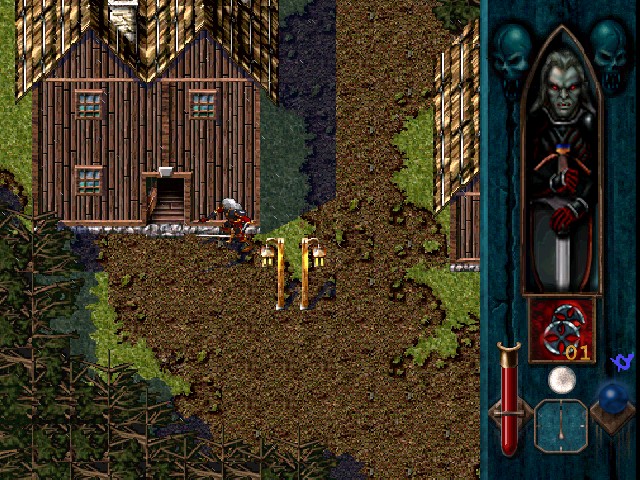
Legacy of Kain: Blood Omen
 It's that sinking feeling of sellers remorse calling after me. It was one of the first - and last- opportunities I'd get to experience the feeling.


If you're a lucky one who's never let go of anything under the pretenses of a fair sale, Sellers Remorse is the strange regret you feel when you think the sale you just made was a bad decision. Maybe the thought crosses your mind that the person you've sold it to isn't going to appreciate it (the person who bought Defiance from me said "So it's like God of War with vampires right?) or even you're simply upset that it no longer belongs to you.

When I was "Building My Collection" (I still kind of am) I ran into this all the time. I would trade one game for another one that I absolutely had to have. I absolutely hate the sellers mindset. I've only ever bought a videogame I wanted so that I could enjoy it, not so it could sit on a shelf. Yes, I own Parasite Eve II because I thoroughly enjoy it. That's just my bad taste overriding rationale.

But I handed almost all of the Legacy of Kain series to a guy who wanted to buy them because he needed to fill a space on his shelf marked with the name of the series. I remember the schlub so well because I tried to hold and interesting conversation with him about where videogames were going as an art form and he was convinced that Infinity Ward was going to be the future and that videogames needed to draw from cinema.

Why did I do that? I'm a terrible judge of character and I hate collectors but not enough to not trade with them, that's why. Yet with every time a game like Suikoden II is re-released on Playstation Network, it drives the cost of the original games  down and people that actually want to play them in their original format can finally enjoy them.

Videogames second hand market is collector driven. As an industry (art form?) videogames have no "criterion collection" unless the original publisher themselves decides to re-release a title. Sometimes this is even impossible because of how content rights in the world of videogames work, as in the case of Mega Man Legends 2. A game which can probably never be re-released unless Capcom is willing to re-record every bit of dialogue.
Legacy of Kain: Defiance

So, in an example I use all the time: If you want to play it be willing to pay hundreds of dollars.
Or emulate it, which is a crime.

Now, with Steam we're seeing a different kind of market play out. I own dozens of games and I know people that sometimes own hundreds. Not only are we purchasing different, but there's really no way for us to "get rid" of games by trading them to someone else.

The market for PC titles now is being consumer driven. We're really driving it with our dollars - through things like Kickstarter and Steam Greenlight. Both of those models do have huge problems with them, but there really needs to be an equivalent for classic games.

Sellers remorse isn't some 'big deal' but it does highlight an outlaying problem with archiving of videogames. At one point it is possible there might not be a way to re-visit older titles. With the way the ESA cracks down on emulation sites and these days, and how few titles are actually being re-released we're facing an absolute loss of history.

So my sellers remorse isn't because the dweeb that I traded games with wont appreciate them. It's because I'm worried that I wont get to experience them again, despite the impact they actually had on the rest of the medium. The videogame industry isn't respecting the medium enough to have people actively engaged in it enough to worry about this kind of stuff, either.

If the most popular videogames are all some God of War / Uncharted level monstrosities, I wouldn't exactly consider them a "serious medium" either and would have no interest in thinking them being cataloged and retained could have any artistic merit.

What kind of future am I looking for? an entirely digital one, or one that still heavily relied on physical media? That's a question that isn't going to be answered if just one person is asking it. Sellers remorse itself isn't a thing I have to deal with very often and is quickly becoming the kind of problem only collectors run into.

I can never get rid of the Magicka franchise, bought on a whim once during a summer sale, and that's almost as bad as giving away something I really enjoyed.


Sunday, July 6, 2014

AUTHENTIC console EXPERIENCE


   I don't remember exactly how old I was when my brother was showing off one of the first things he'd ever downloaded on our old dial-up connection. I was about eight, maybe ten - I dunno, but I remember the little severed hand mouse pointer fondly.

  The program was NESticle, and I remember it because it was my first foray into emulation. I had no idea how it worked and my oldest brother was loath to explain it to me. Maybe he considered being able to work out how a computer program functioned to be my rite of passage.

(One of the first NES emulators)
   I grew up with an NES, but videogames hadn't been something that was readily available when I was a kid. Even when my brothers had convinced my parents to buy a Playstation, most of the stuff we afforded was all second hand or purchased when the local video-store stopped renting older games. There was the occasional trip to Software Etc, but by the time that was happening the Playstation was an old fad to my brothers.

   We never had a whole lot of cash when I was a kid, so in many ways being able to trade games and especially being able to trade PC games contributed a lot to me playing videogames as a kid. I grew out of Zelda and into games like Anachronox, which is still one of my favorite games.

   I was absolutely starstruck, sitting there watching my brother play Castlevania on our incredibly old PC. I was enamored with Quake III Arena when he brought it home - but there was just something utterly amazing at finally having acces to all of the games I had only ever gotten to read about.
(Anachronox)
   Sometimes I get asked the question what games I "grew" up with. I mostly tell people Zelda, but what I generally leave out is that I grew up only playing Zelda. It was one of the few games my parents had for the Nintendo they had bought. Sometimes I would even watch my dad - who is a through and through cowboy, sit and navigate the caverns and forests of Hyrule.

   By the time our first computer rolled around, we didn't have a working NES anymore. My brothers had moved onto the Playstation. As far as older consoles go we'd had a Sega Genesis but there wasn't anything about it that interested me. Telling, I also had never owned a single Sonic The Hedgehog game for our Sega.

   When my brother had finally drug me to the computer the day he showed me NESticle I probably sat for a good six or seven hours after he relinquished control of it. I spent time with Zelda and Mario, Megaman and all of the games I'd only ever gotten a chance to read about.

It was a weird validating experience of my childhood, that at that time was starting to give way to being worried about acting old enough. By the time I learned enough about computers to surf on the waves of the net and metaphorically "hang ten" with data, I mostly wasted afternoons trying to download Metal Slug X off of Edge Emulation.


   Yes: emulation was kind of a big deal. I was "that" little kid that was super into videogames. I bought Tips & Tricks monthly, Playstation magazine. It gave me a chance to have a dialogue with my older brothers, and I felt included. One day I went from sitting on the floor watching my oldest brother beat Castlevania to trying to do it myself while he watched. He did quite a lot of laughing, too.

  Eventually I got more interested in emulation than any of my brothers were. If I could experience the NES, what was next? I never had an Super Nintendo as a kid, instead I had to make do with occasionally renting it, or playing Secret of Mana with my cousin. Either way, it mean a whole lot of sitting on the floor in peoples living rooms.

(Secret of Mana)
   It would also be my oldest brother who would help my personal foray into the world of emulation. Help me sign up for my first forum, too - though I doubt he remembers it (The forum was Edge Emulation!). It was weird, thinking about it now, how much my life on the internet as a kid and a younger teenager kind of mirrored his. He'd signed up for internet comedy megastars Something Awful, I settled for Arch-Nacho and Tortilla Godzilla's Quality Roms (second forum, after Edge shut down)

   It was through that website, that I started to see that emulation was more than just a way to play old games. Emulation, the argument became, was a legitimate way to archive and support the proliferation of older titles. It's an easy argument to make, too.

   As an example, Megaman Legends 2 is basically considered one of the mega classic videogames, but if you want to play it now it's going to cost you upward of two-hundred dollars. Closer to a hundred if you're just gonna buy the disc by itself. Videogames are a collector controlled second hand market. What that means is that prices for second hand games aren't controlled by actual demand, but artificially made desirable by collectors offering titles at ridiculous prices.

   Megaman Legends 2 is ascribed that value because it's particularly rare - losing it for cheap would be considered a bad investment. I doubt most of the people that think it's a particularly mega cool game have even ever played it - but it had a limited print run and it wont ever get released. So if you want to play it, you're going to pay for it.

   Unless there were some magical workaround that meant someone could just allegedly acquire it and play it for free. Oh wait that's emulation, no big deal. I played Megaman Legends 2 through an emulator, and countless other games. The ESA - who does very little to archive or allow copies of videogames to proliferate, considers me a criminal.

(Megaman Legends 2)
   If you're not familiar, ESA stands for Entertainment Software Association. They've existed for quite awhile, but it was only during the 2000's that they really started to have an effect on emulation: Telling hazily legal websites which titles they could offer and which they couldn't. This is weird, to me, as a person who doesn't work in the industry, that it would happen.

   Videogames are not "film". For various reasons, videogames in the past were hardly ever re-released. If you wanted to play Super Metroid legally before the Virtual Console existed, you needed to buy an SNES and find someone selling a copy of the game, hopefully for an affordable price.

   Even though we now do have resources that allow players to legally experience some games, and not just experience them but do so in a way that supports the original developer, there are still titles that will never be offered through these avenues.

   Developer incompetence, or licensing issues? (If involving Capcom, the former).
Either way, emulation continues to be a bit of a hot button issue. It's getting harder and harder every day to find roms that are quality like you used to. To say nothing of losing SnesOrama's incredibly valuable trade forum - which had titles that are literally impossible to find physical copies of.

   When was the last time you heard somebody get excited about fuckin' The Granstream Saga?
It doesn't really matter, but there's an argument to be made that just like film, every videogame is important to discussion and understanding of the medium. Less so to groups like the ESA, who consider the very cataloging and archiving of these titles a heinous affront to nature and culture (probably).

(Twinkle Star Sprites)
  I could seriously go to jail for wanting to play the NEO-GEO version of Twinkle Star Sprites. That's a very real thing that could happen. That doesn't seem weird to anyone else? I understand the argument against film piracy, because a lot of the time the original creators are still profiting from re-releases. That's not something that's true about videogames, though. I doubt Takashi Takebe saw a dollar of the Playstation Network re-release of Grandia II.

   Irrespective of it's legality, emulation has affected an entire age group of people who play videogames. Fitted somewhere in the "generation y" aspect of our society are the people like me who might've grown up playing an SNES or Sega CD on their computer, rather than the authentic console experience. Some of these people might even be the age where they could buy a gamepad meant to work with their controller, at least recreating part of that classic experience. Some of them might even have played them sitting on their carpet.

   I doubt I'd have the interest I do in videogames - artistically or even in terms of the enjoyment I get out of them without emulation. It was EPSXE, which I spent days and days trying to get to work, that I was finally able to play Vagrant Story through. This was before it was offered on Playstation Network for 4.99.

(Vagrant Story)
   I could have bought Vagrant Story no doubt! Just who's hands would I have been putting my hard earned dollar in though? In the hands of another player, no doubt, but how much I wanted to experience Vagrant Story far outshined how willing I was to pay some collector more money than I felt comfortable with.

  Today, Vagrant Story is still on my list of favorite videogames. It's a mess of half-imagined game mechanics that don't always work the way they need to. Vagrant Story's real charm is right there in the title: There's not a better example of a well crafted narrative on the original Playstation.
I played it through emulation and it influenced the kind of games I'd like to go on to make, it also influenced the stories I write about and what kind of quality I want to see more games aspire to.

(Vagrant Story)
   My interface with EPSXE was an old digital keyboard on my parents computer that didn't quite work all of the way. Mapping out the original Playstation's controls to it was a nightmare, and finding a way that the game ran comfortably even more so. I was also running a plugin pack that made the game seem a little sharper and eliminated the original Playstation's fuzziness.

   There was no "authentic console experience" with Vagrant Story. I played a game independent of slowdown issues, stuttering sound being played back through crusty hardware or jagged edges from a stressed graphics chip. I played a version independent of the real one, and to be honest, I would take it 100% of the time.

  Now, at 22, I've had plenty of time to go back and play some of these games in their original forms. What I've discovered is that there's really no "more valid" way to experience older videogames. You can tell someone that the best way to experience Casablanca is in an old dusty theatre somewhere, but you can't discount their opinion and relationship to the film because they didn't see it that way.

   Even in spite of events like the shutdown of SnesOrama's popular trade board, people continue to collect, share and archive older videogames. Maybe some of them do it just so they can play them, maybe some of them have a full hard-drive waiting for the day the old discs and cartridges stop working so they can say "Hah! I told you!" either way, I owe a love of videogames as a medium to a lot of those people, and to my brother for helping me take those first steps.

-SKELETONS

Saturday, June 14, 2014

Open Worlds, (Pt 1)

   Can you think of the biggest design trend in the last ten years?
If you’re a fan of Assassins Creed, Grand Theft Auto or Saints Row; you probably know already.
Aside from Call Of Duty (so far, anyway) just about every major AAA release has been some kind of open world game, or at the very least, had open world elements.

  As hardware capability increased, players started demanding larger play areas, and more things to do in them. Game developers have continually had to straddle a difficult line, designing a world that’s believably open but has restrictions isn’t an easy thing to do.

   We can look at Dead Island as an example. On top of being pretty shallow,
The game’s open world doesn’t even hardly exist to serve the mechanics that do work.
In Dead Island the player is given a tropical paradise that’s been razed by the existence of the undead,
yet despite having survival mechanics The World was hardly designed around them.


   Zombies, even in large groups, are hardly a threat because the player doesn’t take lasting damage and heals by drinking energy drinks. Eventually, combat far outpaces survival because the player can reach a point where making even some of the most dangerous weapons in the game isn't even difficult because every resource is eternally respawning.
That 'paints the walls' so to speak. The player (you) becomes cognizant of the walls that hold him in place, and suddenly the open world seems limiting.

   As the second example I'll give, Saints Row has always managed to hide the limitations of the world by distracting the player: It gives you enough things to do in a few different categories that by the time you get fatigued of something you can always move to the next mini-game or set of stunts. Each game in the Saints Row series has upped the amount of distractions to new levels. Saints Row IV is practically unprecedented in how little the game takes itself seriously; yet in not in trying to set itself as a believable reality the player never notices how limited the game world is.

   That's not the only way to make an open world game work; but generally the more ridiculous and videogame-y, the better. Even Grand Theft Auto has the elements of each title that exist as satire, either of our culture at large or of other videogames. The saying goes that if you try to make a world too real, players will see the seams easier - so you deliberately involve elements that are fantastical.
  
Out of the gate, I chose Sleeping Dogs because it tries to represent a fictional version of Hong Kong in a cinema-inspired open world, stripping out the usual elements of parody and satire that run through these games and going for a more down-to-earth approach.
We arrive, finally, at Sleeping Dogs, which I've decided as a new series of SATURDAY SKELETONS (we're gonna call it that now) is going to be my focus for the next few weeks.

Sunday, June 1, 2014

Legacy + Bloodspell Review Crosspost

   Just a heads up! This post is coming in super late and I know I missed last one, I apologize. I'm debating whether a different day a week would be better for this, maybe Sunday or Monday I'm not entirely sure yet. It's been super busy here, as you all know I now work for DC COMICS NEWS
I also want to leave a brief that I'll try as best as I can to blog through the upcoming PHOENIX COMIC CON in addition to hopefully some interviews for both here and DC COMICS NEWS.

   So any way the most important part of this review is that I kind of neglected that the book is pretty much an even split between younger Zatanna and Black Canary. I overlooked that in my initial readings, so the fact that I state the crux is about the current team is only half true.

   Other stuff that got left on the cutting room floor: A lot more about Zatanna and Black Canary's characterization in The New 52. Ever since the 'new universe' (i'd honestly rather have The New Universe)

   Generally, just like when I write about videogames or even just do straight up blogging, which isn't very often, there's still a lot I have to eventually decide to cut. I know I have a huge tendency to ramble and I sometimes have to reign some of my articles in. I could write entire pages (or more!) on some of the stuff I've cut out of just that review.

  What I had to cut most of is a ton of paragraphs about my first exposures to Zatanna and Black Canary as characters. It wasn't actually until that series Paul Dini did a few years ago that I'd ever picked up a solo Zatanna book.

Zatanna's one of my favorite characters in the DC Universe, because she's so outwardly fun-loving. It's hard to take her serious as a brooder because she so clearly loves what she does as a superhero.
I think in The New 52, Zatanna being disconnected as a 'legacy' character hurts her.

If you're not familiar with her, in the pre New 52 universe, Zatanna's father is a famous magician superhero, and a member of the original Justice Society. That meant she had something to live up to - an important legacy and role to play in the history of the Justice League.

Legacy isn't as important in The New 52, and there's a host of characters that hurts.

Bloodspell Review