hooray it's 2016
yes i know i missed basically the entire tail end of last year
i was waist deep in journeying and adventuring
our own skeleton friend isn't around to make a post for us this year like he did last year unfortunately, so we'll have to get by on our own. our hearts go out to him.
(that sort of writing can be found here: god bless this mess)
things that happened at the end of 2015
-prospective career changes
-more writing that didn't get published
-getting my life in order
-planning next years events
fin
Sunday, January 10, 2016

Tuesday, September 15, 2015
waist deep
hello
i am basically waist deep in MGSV right now and have been busy with things
MGSV is a really good game and at times a really goofy game and not necessarily the kind of high note i was expecting the series to end on
i am expecting Konami to bury it and the fox engine and Kojima to not know what to do for a year or more afterwards, kind of like when Itagaki split from Tecmo
Sunday, July 26, 2015
Gerimi Burleigh of Optichouse Dot Com!
Hey folks! You wouldn't know it unless you were following Infinite Longbox on Tumblr at the time, but I covered Phoenix Comic Con for them this year and you can find my interviews I did for them with some very exciting people over there.
Unfortunately for personal reasons I was no longer able to commit at the website itself, and now I will be posting my last two interviews here on my personal blog as they would be if I had presented them on the website itself, sans reviews of content.
Now I know most of you wont be familiar with Gerimi Burleigh which is unfortunate but I present this interview as a means to rectify that. He's a brilliant guy who's been working on some awesome independent comics for the last few years now and I really want to share his work and dedication to comics here. It's taken me much to long to get this out here and after deliberating, I've decided to run it here.
SK:Hi I'm Sam Kittreland I am with-
GB: Gerimi Burleigh from Optichouse.com
SK: And what's your most recent title?
GB:Morningstar, it's a western about Lucifer's fall from heaven...as a western!
SK: How did you come up with the idea for Morningstar? Is it something you've been thinking of doing for a long time?
GB: I've been sitting on this idea for probably like fifteen years, maybe even longer then that. I was at San-Diego Comiccon years ago and inbetween going to panels, I was just sitting around doing some sketches in my sketch book. I just drew some cowboys with the shotguns and the trenchcoats and for some reason it occurred to me to put angel wings on them. After I did that, I thought 'there's a story here'. And after that it just took a little while to massage it and build the pieces around it, realizing it was going to be about Lucifer and his fall.

GB: It's an eight issue series, and I have issues one through four published now, and I'm busy writing issue five.
SK: Would you say Morningstar is the longest series you've worked on so far?
GB:Yeah definitely, the other book I published in 2009 was a self contained graphic novel called Eye of the Gods that one is a psychological thriller that was a one-hundred and forty-four page book so it's equivalent to like a four to six issue miniseries. Morningstar is gonna be a little bit longer than that.
SK:After Morningstar, what do you have planned?
GB: Well y'know I have sort of a young adult fantasy story that involves a bunch of teenage girls that are like barbarian princesses. Either that or a vampire gladiator epic I have planned to do.
SK: That sounds really cool. So I noticed last night while I was reading it that Morningstar draws a lot of references to old western movies, so what were some of the artistic influences you had? Did you draw a lot from other comics or cinema?
GB:It was definitely cinema. I can remember as a kid watching a lot of the Sergio Leone Clint Eastwood spaghetti westerns, The Outlaw Josie Wales and obviously The Good, the Bad and the Ugly Even if I necessarily didn't understand what was going on as a little kid-
SK: It left an impact -
GB:Yeah, the imagery of those stories is so powerful. Of these gunfights and lonesome cowboys. They were an equivalent to samurai warriors, except on horses with pistols instead of swords. That mystique of the tone that they carry is what I tried to go for in the comic.
SK: Even artistically going to the whole samurai thing - the cowboy is one of the most famous silhouettes in the world. It's very iconic imagery and i'm surprised I don't see more western comics. Could you see yourself doing another western?
GB: I'm not neccesarily concerned with what genre I work in because I love all genre, I love fantasy and western and horror, when I come up with a story it's more about the journey the characters are going on first. Whatever that emotional arc is I may decide that "oh this is a good horror story or a good western." I can take a different type of story that I was originally planning on doing as horror and shift it into a western. I try to be fluid about it and let the project tell me what genre it wants to fit into.
SK: What was it like growing up in Los Angeles as someone who wanted to do comics, or was it something that came to you later in life?
GB: Well you know it was a really great environment! You have art center out there of course, I didn't go to school there but I have friends who went there, a lot of the animation industry is based there too. In fact in college I was an animation intern at Nickolodeon. It's great to be around people who can show you - it's one thing to go to art school it's another thing to go to work at a job where people are doing creative work professionally. Some of the things you learn in school are theoretical and people do things different just out of the necessity of work - producing creativity on demand, on a schedule is very difficult and very challenging, and to learn a lot from people who do it they show you...not necessarily a shortcut, but ways to do it and be efficient.
SK: Would you ever consider setting a comic book in the area that you grew up in? or something autobiographical about growing up in Los Angeles?
GB:Well I do actually have a book that I plan to do. My fiance works in educational psychology and she does a lot with special needs kids that are emotionally disturbed. I had an idea for a horror story that kind of revolved around emotionally disturbed children, and in that one I realized it was based on stuff I heard from her that in general the kids had to deal with and how the trauma effects the family. When you can add a little bit of supernatural horror to something that is real horror that people have to do in their life, that's really powerful. I realize it made sense since I know the area that we live, why not just base it around our real lives? Why not just inject fiction into an environment that I was familiar with?
SK: What kind of stuff did you grow up reading?
GB: Well I was always a big nerd, I loved Dungeons and Dragons as a kid and I ran tables as a DM. I read a lot of Dragonlance and Forgotten Realms stuff, R.A Salvatore. In terms of comic books I grew up on G.I Joe and X-Men, I was kind of a Marvel Comics kid. I read a lot of indies, I tricked my parents early on as a little kid into getting me a subscription to Heavy Metal Magazine. My local newsstand - they didn't care about selling it to kids, it's just another magazine. I showed it to my parents the first couple of pages that it was a comic magazine that I could be reading. I definitely didn't show them any of the T&A or violence [laughs] I was definitely reading stuff that wasn't age appropriate for me. My taste in art has always been skewed to darker and more mature stuff anyway.
SK: Was it...I kind of want to ask, have you been drawing since you were a little kid? Or did you get exposed to comics first?
GB: Well I was always drawing throughout all of my life. I think the turn of it in comics for me was...I was reading G.I Joe and Transformers because of the cartoons. I had a friend take me to a local comic shop. There was a time where I would miss things and think it was gone forever, and my friend was all "Naw there's this place you can go if you miss something."
SK: [laughs] Yeah, a comic shop.
GB: Yeah, and the thing that really blew the doors off of my mind was that my local shop had raffles every weekend and they would give away some comics, and I got the very first trade of Walt Simonson's Starslammers. That book was as impactful to me as Star-Wars. I had seen it by then, and I know even the Star-Wars comics that like Archie Goodwin wrote and Howard Chaykin drew were very influential, but for me Starslammers felt like it took all of the things in sci-fi and fantasy in cinema and made it that exciting in comics. That's when I became addicted to the medium and wanting to read stuff beyond the cartoons that I knew. That's what led me to wanting to check out superhero stuff and be open to all kinds of genres within comics. It wasn't that long after that I started wanting to draw my own comics.
SK: I've been avoiding asking people while I talk to people I kind of try to avoid asking any of the indie artists which character for Marvel or Dc do you want to work on, I don't really believe that the endgame for the industry should be working on someone else stories...so maybe is there something that during Morningstar has been burning to get out of you?
GB: Well with Morningstar...hm, honestly the first graphic novel I did, Eye of the Gods the reason why I did that was because I didn't feel like my writing chops were up to the challenge of doing Morningstar. Which has seven main characters plus others whereas Eye of the Gods is a little more intimate. Morningstar is kind of the book that I said if I only ever did one comic in my life, Morningstar was that story. I figured y'know life is short, who knows what's going to happen to you? Once I felt I was ready to tackle it I took it on. That said everyday I may come up with an idea here and there for a story. Sometimes it's just one line of inspiration, sometimes it's just a paragraph. Sometimes I'll sit there and write a five page document and be like alright I've got it all plotted out. I've got more stories planned for my life than I could ever do before I die, and they're all over in different genres. Fantasy, horror, not so much so many superhero comics. Not because I have a distaste for superhero comics! I grew up reading so many of them and I feel like so much has been said in American comics that I don't know what I could bring to it that's different, so I felt like going and exploring other genre that aren't done as often in superhero comics.
SK: Is there anything you want to say to people that are going to hear about you today? Should people check out Morningstar first or Eye of the Gods?
GB: The main thing I would say is to check out my website, optichouse.com! I have the first whole chapter of Morningstar and the first 30 pages of Eye of the Gods and usually the first 12 pages of each issue. Just check out the website and see if it's a flavor you like.
-sk
Unfortunately for personal reasons I was no longer able to commit at the website itself, and now I will be posting my last two interviews here on my personal blog as they would be if I had presented them on the website itself, sans reviews of content.
 |
| the man himself! |
SK:Hi I'm Sam Kittreland I am with-
GB: Gerimi Burleigh from Optichouse.com
SK: And what's your most recent title?
GB:Morningstar, it's a western about Lucifer's fall from heaven...as a western!
SK: How did you come up with the idea for Morningstar? Is it something you've been thinking of doing for a long time?
GB: I've been sitting on this idea for probably like fifteen years, maybe even longer then that. I was at San-Diego Comiccon years ago and inbetween going to panels, I was just sitting around doing some sketches in my sketch book. I just drew some cowboys with the shotguns and the trenchcoats and for some reason it occurred to me to put angel wings on them. After I did that, I thought 'there's a story here'. And after that it just took a little while to massage it and build the pieces around it, realizing it was going to be about Lucifer and his fall.

SK: Would you say Morningstar is the longest series you've worked on so far?
GB:Yeah definitely, the other book I published in 2009 was a self contained graphic novel called Eye of the Gods that one is a psychological thriller that was a one-hundred and forty-four page book so it's equivalent to like a four to six issue miniseries. Morningstar is gonna be a little bit longer than that.
SK:After Morningstar, what do you have planned?
GB: Well y'know I have sort of a young adult fantasy story that involves a bunch of teenage girls that are like barbarian princesses. Either that or a vampire gladiator epic I have planned to do.
SK: That sounds really cool. So I noticed last night while I was reading it that Morningstar draws a lot of references to old western movies, so what were some of the artistic influences you had? Did you draw a lot from other comics or cinema?
GB:It was definitely cinema. I can remember as a kid watching a lot of the Sergio Leone Clint Eastwood spaghetti westerns, The Outlaw Josie Wales and obviously The Good, the Bad and the Ugly Even if I necessarily didn't understand what was going on as a little kid-
SK: It left an impact -
GB:Yeah, the imagery of those stories is so powerful. Of these gunfights and lonesome cowboys. They were an equivalent to samurai warriors, except on horses with pistols instead of swords. That mystique of the tone that they carry is what I tried to go for in the comic.
SK: Even artistically going to the whole samurai thing - the cowboy is one of the most famous silhouettes in the world. It's very iconic imagery and i'm surprised I don't see more western comics. Could you see yourself doing another western?
GB: I'm not neccesarily concerned with what genre I work in because I love all genre, I love fantasy and western and horror, when I come up with a story it's more about the journey the characters are going on first. Whatever that emotional arc is I may decide that "oh this is a good horror story or a good western." I can take a different type of story that I was originally planning on doing as horror and shift it into a western. I try to be fluid about it and let the project tell me what genre it wants to fit into.
SK: What was it like growing up in Los Angeles as someone who wanted to do comics, or was it something that came to you later in life?
GB: Well you know it was a really great environment! You have art center out there of course, I didn't go to school there but I have friends who went there, a lot of the animation industry is based there too. In fact in college I was an animation intern at Nickolodeon. It's great to be around people who can show you - it's one thing to go to art school it's another thing to go to work at a job where people are doing creative work professionally. Some of the things you learn in school are theoretical and people do things different just out of the necessity of work - producing creativity on demand, on a schedule is very difficult and very challenging, and to learn a lot from people who do it they show you...not necessarily a shortcut, but ways to do it and be efficient.
SK: Would you ever consider setting a comic book in the area that you grew up in? or something autobiographical about growing up in Los Angeles?
GB:Well I do actually have a book that I plan to do. My fiance works in educational psychology and she does a lot with special needs kids that are emotionally disturbed. I had an idea for a horror story that kind of revolved around emotionally disturbed children, and in that one I realized it was based on stuff I heard from her that in general the kids had to deal with and how the trauma effects the family. When you can add a little bit of supernatural horror to something that is real horror that people have to do in their life, that's really powerful. I realize it made sense since I know the area that we live, why not just base it around our real lives? Why not just inject fiction into an environment that I was familiar with?
 |
| Morningstar |
SK: What kind of stuff did you grow up reading?
GB: Well I was always a big nerd, I loved Dungeons and Dragons as a kid and I ran tables as a DM. I read a lot of Dragonlance and Forgotten Realms stuff, R.A Salvatore. In terms of comic books I grew up on G.I Joe and X-Men, I was kind of a Marvel Comics kid. I read a lot of indies, I tricked my parents early on as a little kid into getting me a subscription to Heavy Metal Magazine. My local newsstand - they didn't care about selling it to kids, it's just another magazine. I showed it to my parents the first couple of pages that it was a comic magazine that I could be reading. I definitely didn't show them any of the T&A or violence [laughs] I was definitely reading stuff that wasn't age appropriate for me. My taste in art has always been skewed to darker and more mature stuff anyway.
SK: Was it...I kind of want to ask, have you been drawing since you were a little kid? Or did you get exposed to comics first?
GB: Well I was always drawing throughout all of my life. I think the turn of it in comics for me was...I was reading G.I Joe and Transformers because of the cartoons. I had a friend take me to a local comic shop. There was a time where I would miss things and think it was gone forever, and my friend was all "Naw there's this place you can go if you miss something."
SK: [laughs] Yeah, a comic shop.
GB: Yeah, and the thing that really blew the doors off of my mind was that my local shop had raffles every weekend and they would give away some comics, and I got the very first trade of Walt Simonson's Starslammers. That book was as impactful to me as Star-Wars. I had seen it by then, and I know even the Star-Wars comics that like Archie Goodwin wrote and Howard Chaykin drew were very influential, but for me Starslammers felt like it took all of the things in sci-fi and fantasy in cinema and made it that exciting in comics. That's when I became addicted to the medium and wanting to read stuff beyond the cartoons that I knew. That's what led me to wanting to check out superhero stuff and be open to all kinds of genres within comics. It wasn't that long after that I started wanting to draw my own comics.
SK: I've been avoiding asking people while I talk to people I kind of try to avoid asking any of the indie artists which character for Marvel or Dc do you want to work on, I don't really believe that the endgame for the industry should be working on someone else stories...so maybe is there something that during Morningstar has been burning to get out of you?
GB: Well with Morningstar...hm, honestly the first graphic novel I did, Eye of the Gods the reason why I did that was because I didn't feel like my writing chops were up to the challenge of doing Morningstar. Which has seven main characters plus others whereas Eye of the Gods is a little more intimate. Morningstar is kind of the book that I said if I only ever did one comic in my life, Morningstar was that story. I figured y'know life is short, who knows what's going to happen to you? Once I felt I was ready to tackle it I took it on. That said everyday I may come up with an idea here and there for a story. Sometimes it's just one line of inspiration, sometimes it's just a paragraph. Sometimes I'll sit there and write a five page document and be like alright I've got it all plotted out. I've got more stories planned for my life than I could ever do before I die, and they're all over in different genres. Fantasy, horror, not so much so many superhero comics. Not because I have a distaste for superhero comics! I grew up reading so many of them and I feel like so much has been said in American comics that I don't know what I could bring to it that's different, so I felt like going and exploring other genre that aren't done as often in superhero comics.
SK: Is there anything you want to say to people that are going to hear about you today? Should people check out Morningstar first or Eye of the Gods?
GB: The main thing I would say is to check out my website, optichouse.com! I have the first whole chapter of Morningstar and the first 30 pages of Eye of the Gods and usually the first 12 pages of each issue. Just check out the website and see if it's a flavor you like.
-sk
Monday, June 15, 2015
the objectively best characters in dragon age: inquisition
 |
| Varric Tethras |
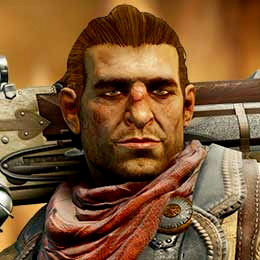
In any other fantasy work: I hate this character. In Dragon Age, Varric's voice actor and general panache make him immediately the most likable person you meet. He's also likely the first person to encourage the player to kind of just dick-around for most of the Haven chapter and do whatever.
Maybe his backstory hints at a tragic history or maybe it doesn't. Do you know why I don't care: I didn't play Dragon Age 2 or any of the others so if he has a weak backstory or wasn't The Greatest in another game I can only draw a conclusion from this one. This one: He is a Boss, and has a crossbow named after a lost love and gosh that's just so weepy and poetic and he's a Dwarf writer how could you not like him?
 |
| Lady Josephine Montilyet |
After a mandatory story sequence where she flusters about her families lack of funds and you can basically respond by hitting on her and she's all like "Inquisitor I don't get what you mean" I realize this Lady is probably flustered by everything in her life but to her the Inquisitor is just another dude and then I knew that it had to be True.
Outside of her Romance options I feel like Lady Josephine is the most sane person in the Inquisition in terms of how to respond poltiically. Ever the diplomat, the options you get if you favor her seem to leave you in much more of a neutral and advantageous political position then I dunno having a spy kill a bunch of dudes
 |
| Leliana Fromthefirstgame |
Hey: I didn't play Dragon Age 1. So far though I've spent a lot of time in Inquisition wishing that Leliana could be in my party instead of like fuckin' I unno Cassandra or something. Leliana is the Dope Spymaster Lady and even though characters like Varric or Lord Blackwall are implied to be troubled characters, Leliana is the only one that comes across directly from meeting her as being spurned on by something dark and trying to turn it good.
It is, after all, Leliana in the ruined timeline that isn't above sacrificing anything and everything to restore order to the world and make things right. You don't see that from Solas or even anyone else that you take with you. Also she openly threatens you a bunch of time throughout the game and it's just Great.

If Dragon Age were a 70's weird fantasy movie, Dorian would be played by John Cleese and he would 100% be the exact same character. Dorian is the perfect character in the game to arrive when he does. Right around the time my Inquisitor started to become a little bit too self-important, the game introduces Dorian who's personality seems to be manifest to drag the wind out of the sails of too high-and-mighty players and also the person you have in your party anytime you want to be Extra Charming Rag Tag Heroes
Monday, April 20, 2015
lonely
Kitty Horrorshow is the latest in a group of indie developers who's prime focus seems to be crafting exploration based, lonely worlds.
not lonely in the sense of the feeling you get when a long time friend removes you on Facebook over your opinion that their battle for ethics in games journalism is misguided, but lonely like coming to a fairy tale world after the fairy tale has been finished for two centuries.
These are profoundly places where a society has moved on either of its own volition or because they were forced to. Primarily these spaces tend to act clear cut goals as most videogames do, and ever so often they have no regard for giving the player any method of interacting with the world besides looking at places.
A description of these spaces might be "Anor Londo sans weight." and maybe that that description implies is that these spaces are any less games than the one where people rave about it's dark imagery when really you're beset by the same glowing eyed skeletons as you are in other games.
 When I started thinking about my own feelings of loneliness in digital spaces and how I'm more likely to play something like Saints Row III than any of these walk around games when I'm craving loneliness it made me consider just what "loneliness" really means to a player.
Is loneliness being put in a situation without backup? I don't think of the Resident Evil Remake as a super lonely game. Despite the fact that you're in the spencer mansion by yourself, it still falls back on the feelings of peace you get meet another character. It has some of the same action setpieces later in the game that modern titles tend to be so fond of. Sure, the Tyrant is a boss, but he and the arena he's fought in exploding after I shoot them with a rocket launcher kind of muddles the tone the game had been going for up to that point!
Where do we go to be alone as players then, if not decaying fantasy worlds? If not mildew and mold filled mansions (the mildew and the mold is on gross undead men) Not "as people" as "players" as people who primarily engage with digital spaces by actively playing them. If I want to be alone as a person I can go to my room or I can go out into the woods. I know this is a luxury that isn't afforded to everyone.
Where do I go to actively be forgotten and ignored? What kind of spaces cultivate loneliness like how Skyrim's developers worked hard on trying to wow the player every ten seconds?
Are there any? The logical conclusion to this train of thought takes me back to the same place no matter how many times we go through it. We are alone when we're somewhere surrounded by people we don't know. Strangers that invisiblize us either on our own part or a part of the system they belong to.
not lonely in the sense of the feeling you get when a long time friend removes you on Facebook over your opinion that their battle for ethics in games journalism is misguided, but lonely like coming to a fairy tale world after the fairy tale has been finished for two centuries.
These are profoundly places where a society has moved on either of its own volition or because they were forced to. Primarily these spaces tend to act clear cut goals as most videogames do, and ever so often they have no regard for giving the player any method of interacting with the world besides looking at places.
A description of these spaces might be "Anor Londo sans weight." and maybe that that description implies is that these spaces are any less games than the one where people rave about it's dark imagery when really you're beset by the same glowing eyed skeletons as you are in other games.
Is loneliness being put in a situation without backup? I don't think of the Resident Evil Remake as a super lonely game. Despite the fact that you're in the spencer mansion by yourself, it still falls back on the feelings of peace you get meet another character. It has some of the same action setpieces later in the game that modern titles tend to be so fond of. Sure, the Tyrant is a boss, but he and the arena he's fought in exploding after I shoot them with a rocket launcher kind of muddles the tone the game had been going for up to that point!
Where do we go to be alone as players then, if not decaying fantasy worlds? If not mildew and mold filled mansions (the mildew and the mold is on gross undead men) Not "as people" as "players" as people who primarily engage with digital spaces by actively playing them. If I want to be alone as a person I can go to my room or I can go out into the woods. I know this is a luxury that isn't afforded to everyone.
Where do I go to actively be forgotten and ignored? What kind of spaces cultivate loneliness like how Skyrim's developers worked hard on trying to wow the player every ten seconds?
Are there any? The logical conclusion to this train of thought takes me back to the same place no matter how many times we go through it. We are alone when we're somewhere surrounded by people we don't know. Strangers that invisiblize us either on our own part or a part of the system they belong to.
Even saying what the acronym MMOG means out loud fills you with a certain kind of promise.
"Massively Multiplayer Online Game." It's multiplayer so we imagine that moment where someone beats us in Mortal Kombat III on the Sega Genesis when we're teenagers on a dusty couch in a basement or that time we got all of our graduating class together for one last round of Halo multiplied by a few thousand. That moment, repeated over and over again, with every player interaction.
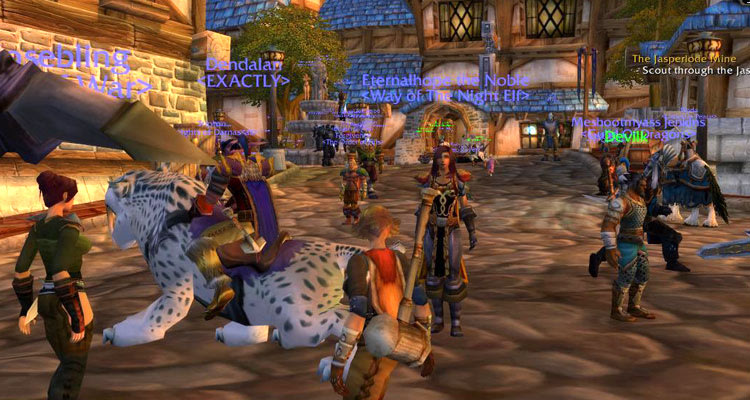
That's not true! not even close to true, even. If you've never played an MMO it's very easy to become a "fringe" player that only surfaces in raids, or even has their own small little group of friends they play with. Don't group up for that first quest with strangers. Avoid the main landmarks.
In real life, this would be advice on how to stay on the run from police. In Azeroth or Eorzea or wherever it's an almost unspoken lifestyle that's adopted by many players.
A peculiar thing: When I first started playing MMO(RPGS) I remembered the names of almost every player I interacted with. Over time, this feeling of community diminished. Now I don't remember your name even if I beat you in PVP because I don't want to fight you.
If anything, I go to Eorza trying to fully escape. In an odd turn of phrase I get this feeling when I'm there that I'm not the only one. Especially for people who live in more urban areas than I do who have very few chances of actually getting away from society and the rest of the world - the MMORPG offers a common and easy to find retreat.
Well, I can imagine that for some it certainly beats hiking.
 What I've found most funny in my travels through many disparate MMO worlds is that a lot of players that tended to hold to their own also tended to be married. Most of these people were actually women trying to get away from the constant presence of their significant others, but a handful of men I know in real life also were in the same boat.
It's no coincidence that the married players I've met also had the tendency to, if not being a solo player - belong to groups mostly if not completely comprised of people that were the same gender.
Returning to Eorza now for the hundredth time I am met by a sense of familiarity with a recent update that adds Final Fantasy VII's ever popular Gold Saucer location with an added bonus of including the proceeding titles Triple Triad card game.
It's funny to me that ontop of all of the mechanics that Final Fantasy XIV features, it takes a pretty rudimentary card game to make me come out of my social shell and actively start seeking and interfacing with other players.
So far, in a simple forced interaction, the developers of Final Fantasy XIV managed to do the one thing no MMORPG has so far: be around other people
-skeletons
"Massively Multiplayer Online Game." It's multiplayer so we imagine that moment where someone beats us in Mortal Kombat III on the Sega Genesis when we're teenagers on a dusty couch in a basement or that time we got all of our graduating class together for one last round of Halo multiplied by a few thousand. That moment, repeated over and over again, with every player interaction.
That's not true! not even close to true, even. If you've never played an MMO it's very easy to become a "fringe" player that only surfaces in raids, or even has their own small little group of friends they play with. Don't group up for that first quest with strangers. Avoid the main landmarks.
In real life, this would be advice on how to stay on the run from police. In Azeroth or Eorzea or wherever it's an almost unspoken lifestyle that's adopted by many players.
A peculiar thing: When I first started playing MMO(RPGS) I remembered the names of almost every player I interacted with. Over time, this feeling of community diminished. Now I don't remember your name even if I beat you in PVP because I don't want to fight you.
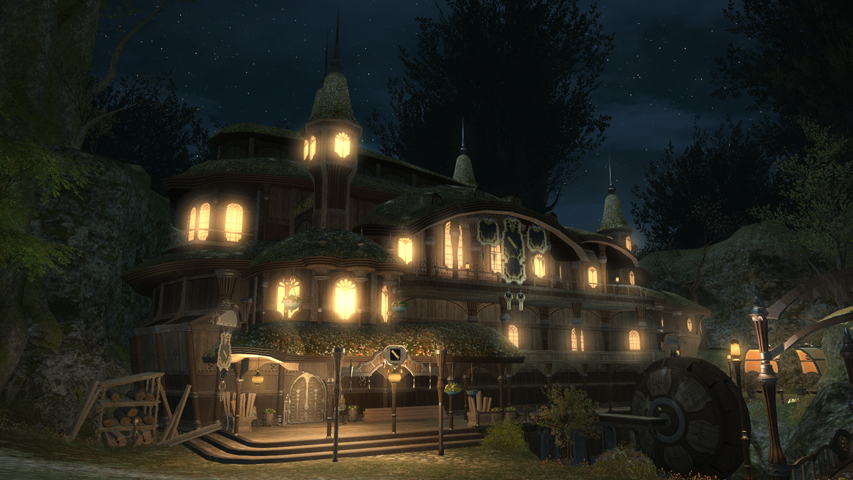
If anything, I go to Eorza trying to fully escape. In an odd turn of phrase I get this feeling when I'm there that I'm not the only one. Especially for people who live in more urban areas than I do who have very few chances of actually getting away from society and the rest of the world - the MMORPG offers a common and easy to find retreat.
Well, I can imagine that for some it certainly beats hiking.
It's no coincidence that the married players I've met also had the tendency to, if not being a solo player - belong to groups mostly if not completely comprised of people that were the same gender.
Returning to Eorza now for the hundredth time I am met by a sense of familiarity with a recent update that adds Final Fantasy VII's ever popular Gold Saucer location with an added bonus of including the proceeding titles Triple Triad card game.
It's funny to me that ontop of all of the mechanics that Final Fantasy XIV features, it takes a pretty rudimentary card game to make me come out of my social shell and actively start seeking and interfacing with other players.
So far, in a simple forced interaction, the developers of Final Fantasy XIV managed to do the one thing no MMORPG has so far: be around other people
-skeletons
Monday, April 6, 2015
western
Red Dead Redemption was, as critics would call it "great"
My Dad plays videogames. He kind of always has - I remember growing up in a very small town with an old NES my parents bought. When I was old enough to start playing videogames rather then just watching my older brothers play them, they had a habit of standing over my shoulder and regaling me with stories about my mom being a waitress and staying up all night with my dad to play Super Mario Brothers before her first shift.
On the same token, my Dad and I never talked much about how he came to videogames. I always just assumed he kind of had an interest. As much as my Dad was always a cowboy - he'd also always been kind of a nerd. It was through my dad I would discover Conan the Barbarian and the artist Frank Frazetta. It was my Dad's taste in pop culture that first got me interested in things like sword and sorcery and indeed the archetypal western hero than any amount of cajoling to "read this!" or "play this!" that my brothers told me.
It was more about the casual references my Dad might drop. He might draw something and tell me it was inspired by something called Conan or even just say he took inspiration from Frank Frazetta's art. It's sort of what gave met he ability to seek out things on my own apart from what was popular for a little kid - or even just at the time.
I played a lot of videogames as a little kid, which is why I enjoy them now. There's still a small part of me that remembers watching my Dad saddle up and head into the desert on his horse, or how he'd disappear a couple of times a year for a weekend or two and come back covered in dust and dirt and tell my mom stories of his weekend spent on a ranch somewhere with his friends.

Eventually our fascination with videogames caught up with my dad sometime around my older brother somehow managing to con my parents into getting us a Playstation. Even though they were hella poor and maintained that the Sega Genesis was going to be the last console they bought for us.
(about every time one of us got a console for the next decade or so until we could work, my parents constantly maintained it all the way through getting a Wii, which was Very Definitely the last console they bought for anyone but themselves.)
Around this time I remember my older brother and my dad having a conversation about games about cowboys. The game they brainstormed never would come to be but it's still written down in a dusty old notebook in one of my parents closets.
A decade later and we'd see the release of Red Dead Redemption on the Playstation Three.
It's the game that makes me think of my Dad most of all, because it's a sometimes cynical look at the decline of the American Cowboy, when my dad is one of the people I think of when that phrase turns up. He's seen more dusty frontiers than I ever will, and I like to think he spends a lot of time remembering places he's been in life when he rides through a desert plain as John Marsten.
Videogames have a powerful ability to make us remember, not just people but places as well.
With a sad note The American Cowboy is now making the full turn into being just another piece of folklore, but there's still room in Videogames to let us experience that.
My Dad plays videogames. He kind of always has - I remember growing up in a very small town with an old NES my parents bought. When I was old enough to start playing videogames rather then just watching my older brothers play them, they had a habit of standing over my shoulder and regaling me with stories about my mom being a waitress and staying up all night with my dad to play Super Mario Brothers before her first shift.
On the same token, my Dad and I never talked much about how he came to videogames. I always just assumed he kind of had an interest. As much as my Dad was always a cowboy - he'd also always been kind of a nerd. It was through my dad I would discover Conan the Barbarian and the artist Frank Frazetta. It was my Dad's taste in pop culture that first got me interested in things like sword and sorcery and indeed the archetypal western hero than any amount of cajoling to "read this!" or "play this!" that my brothers told me.
It was more about the casual references my Dad might drop. He might draw something and tell me it was inspired by something called Conan or even just say he took inspiration from Frank Frazetta's art. It's sort of what gave met he ability to seek out things on my own apart from what was popular for a little kid - or even just at the time.
I played a lot of videogames as a little kid, which is why I enjoy them now. There's still a small part of me that remembers watching my Dad saddle up and head into the desert on his horse, or how he'd disappear a couple of times a year for a weekend or two and come back covered in dust and dirt and tell my mom stories of his weekend spent on a ranch somewhere with his friends.

(about every time one of us got a console for the next decade or so until we could work, my parents constantly maintained it all the way through getting a Wii, which was Very Definitely the last console they bought for anyone but themselves.)
Around this time I remember my older brother and my dad having a conversation about games about cowboys. The game they brainstormed never would come to be but it's still written down in a dusty old notebook in one of my parents closets.
A decade later and we'd see the release of Red Dead Redemption on the Playstation Three.
It's the game that makes me think of my Dad most of all, because it's a sometimes cynical look at the decline of the American Cowboy, when my dad is one of the people I think of when that phrase turns up. He's seen more dusty frontiers than I ever will, and I like to think he spends a lot of time remembering places he's been in life when he rides through a desert plain as John Marsten.
Videogames have a powerful ability to make us remember, not just people but places as well.
With a sad note The American Cowboy is now making the full turn into being just another piece of folklore, but there's still room in Videogames to let us experience that.
Thursday, April 2, 2015
The Hero Returns
Recently (just as of last week) at the behest of a personal friend I've found myself returning to the most recent addition to the Final Fantasy XII series, Lightning Returns.
The trilogy has thus far received incredibly mixed reviews. Outside of some kind of silly "love it or hate it" paradigm all of the Final Fantasy XIII titles are very easy to dislike
I think irrespective of how you feel about the series itself there's little denying that Square Enix has taken a lot of time to experiment with the way these games are designed giving the trilogy project a sword of bizarre personality.
That personality is most distilled into Lightning Returns and the odd off-kilter journey it encompasses.
Really, one thing I keep dwelling on in the setup for the story of this game is that it centers around the return of a heroic character. This is obvious from the title but the story has more to do with characters coming back then just our protagonist, Lightning.
 The introduction sequence for Lightning Returns is the standard Square-Enix fare. A voiceover greets and introduces us to the world and its concepts. After a brief moment we are re-introduced to our pink-haired protagonist looking like some sort of Tetsuya-Nomura designed update of Kain Highwind for the ray-bans and smart watch generation.
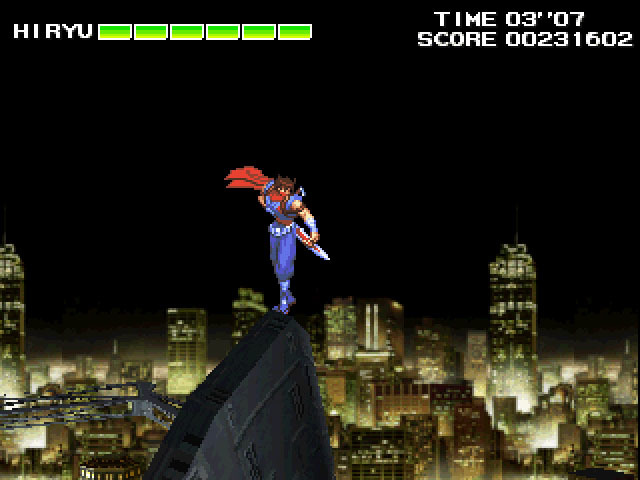
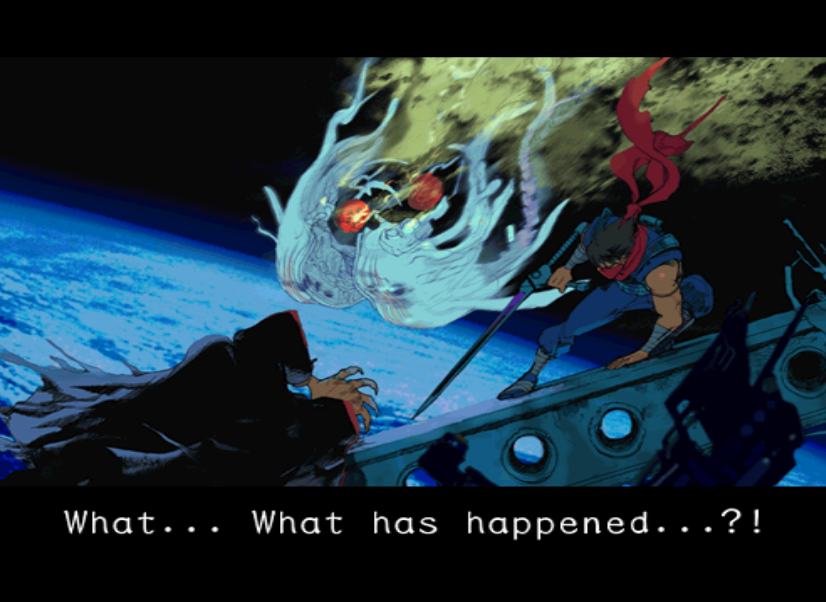
Something that I feel was lacking from the game though can be summed up by the ending portion of another game: specifically by a single screenshot of Strider 2 on the PlayStation.
For lack of being able to source the screenshot of that with the dialogue allow me to provide context. The Strider series barely has any plot at all. The second Strider game structures itself as almost a remake of the original; The levels here all homage the original game like a series of vignettes to make the player feel ostalgic.
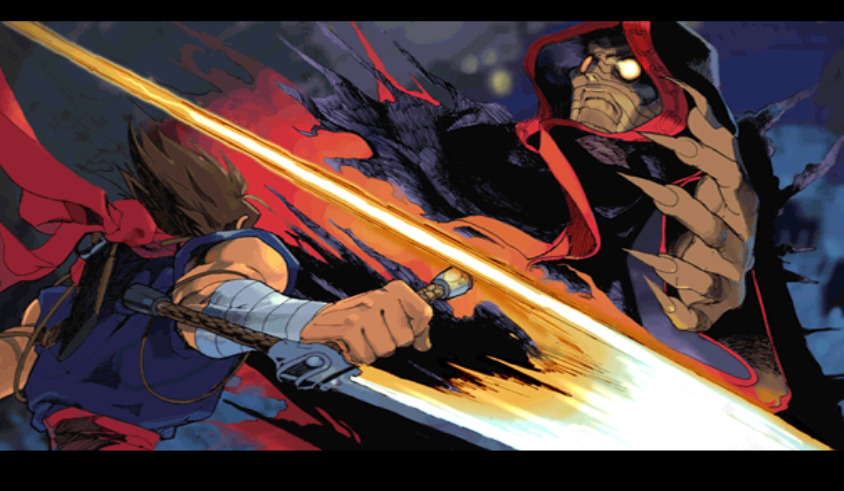
In that screenshot our defiant hero - because defiant is the best word to use to describe a Ninja who wears a red scarf and a bright blue Gi with a sword that glows in the dark who is fighting a cosmic dictator stares down Grandmaster Meio, videogame final boss.
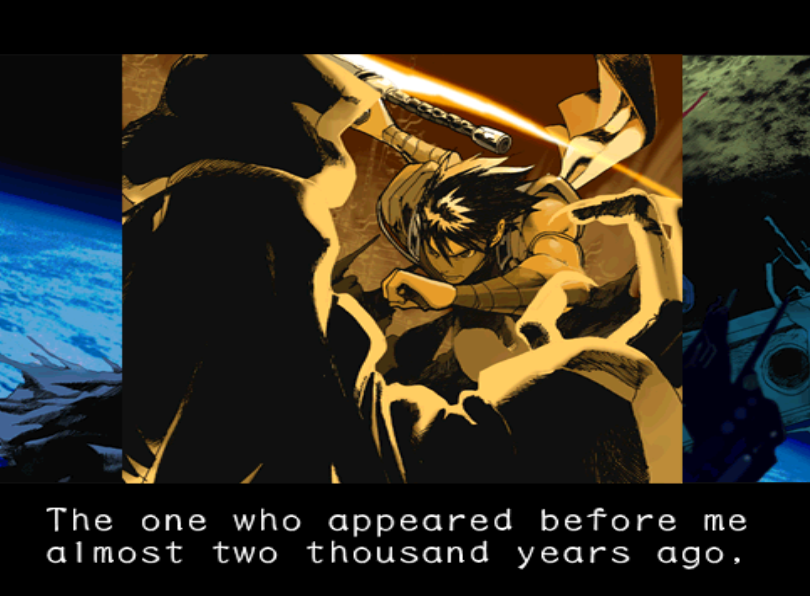
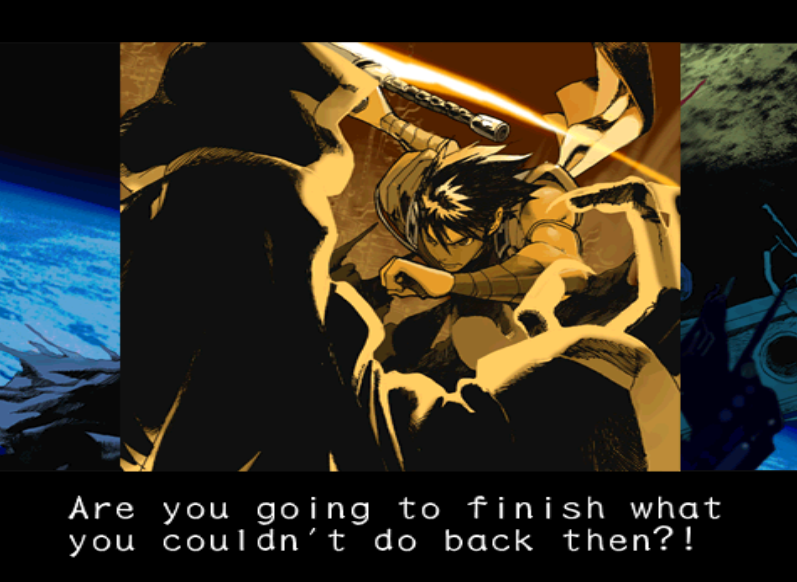
His sword is cutting him completely apart like he were a giant paper mache sculpture. Meio's only words in response are to ask Hiryu if he is indeed the same Strider from two thousand years ago returned to strike him down. Hiryu's response explains it all.
Strider Hiryu is the real weapon of mass destruction in the game: A weapon brough back from hundreds of years ago with one sole and defined purpose. As a player this action was in contradiction to the personality I projected onto Strider, but suddenly it made the whole game make sense.
In kind, that odd indescribable feeling is the same thing that Lightning Returns. A single moment to give everything context - a sense that a hero has returned even if her purpose remains dubious to those outside of the player and one other character.
Lightning Returns will tell you that its world is projected far into the future of the series. Maybe it's hundreds, maybe it's thousands. Tons of interactions from questlines to casual dialogue dropped by the most robotic of NPC motherfuckers drive it through your head that You Have Been Gone.
But it never feels like it. The only plot threads you follow up on connected to the earlier series have to do with main characters. There is no questline that bounces off of something that happened in earlier games in this odd trilogy.
I enjoy Lightning Returns, but the story doesn't make us feel like we're some mythical figure that has returned. It doesn't feel like we were ever really gone.
The trilogy has thus far received incredibly mixed reviews. Outside of some kind of silly "love it or hate it" paradigm all of the Final Fantasy XIII titles are very easy to dislike
I think irrespective of how you feel about the series itself there's little denying that Square Enix has taken a lot of time to experiment with the way these games are designed giving the trilogy project a sword of bizarre personality.
That personality is most distilled into Lightning Returns and the odd off-kilter journey it encompasses.
Really, one thing I keep dwelling on in the setup for the story of this game is that it centers around the return of a heroic character. This is obvious from the title but the story has more to do with characters coming back then just our protagonist, Lightning.
Something that I feel was lacking from the game though can be summed up by the ending portion of another game: specifically by a single screenshot of Strider 2 on the PlayStation.
For lack of being able to source the screenshot of that with the dialogue allow me to provide context. The Strider series barely has any plot at all. The second Strider game structures itself as almost a remake of the original; The levels here all homage the original game like a series of vignettes to make the player feel ostalgic.
In that screenshot our defiant hero - because defiant is the best word to use to describe a Ninja who wears a red scarf and a bright blue Gi with a sword that glows in the dark who is fighting a cosmic dictator stares down Grandmaster Meio, videogame final boss.
His sword is cutting him completely apart like he were a giant paper mache sculpture. Meio's only words in response are to ask Hiryu if he is indeed the same Strider from two thousand years ago returned to strike him down. Hiryu's response explains it all.
Strider Hiryu is the real weapon of mass destruction in the game: A weapon brough back from hundreds of years ago with one sole and defined purpose. As a player this action was in contradiction to the personality I projected onto Strider, but suddenly it made the whole game make sense.
In kind, that odd indescribable feeling is the same thing that Lightning Returns. A single moment to give everything context - a sense that a hero has returned even if her purpose remains dubious to those outside of the player and one other character.
Lightning Returns will tell you that its world is projected far into the future of the series. Maybe it's hundreds, maybe it's thousands. Tons of interactions from questlines to casual dialogue dropped by the most robotic of NPC motherfuckers drive it through your head that You Have Been Gone.
But it never feels like it. The only plot threads you follow up on connected to the earlier series have to do with main characters. There is no questline that bounces off of something that happened in earlier games in this odd trilogy.
I enjoy Lightning Returns, but the story doesn't make us feel like we're some mythical figure that has returned. It doesn't feel like we were ever really gone.
Subscribe to:
Posts (Atom)